
• •
  • Nov. 19, 2026
											stdClass Object
(
    [id] => 853
    [title] => 

Elsewhere, Becoming

[slug] => 2026/11/19/Elsewhere-Becoming [body] =>

In the second release of Resonances, visual artist Jel Suarez traces the continual movements that have marked her life through the lens of her artistic practice. Having moved from Manila to Bacolod City, she reflects on the series of relocations and residencies she has undertaken over the years, and how these have implicitly shaped not only her artmaking but also her sense of identity—one shaped by belonging to multiple places at once, and by the possibility of a life made whole through the traces of the places we carry.

This installment of Resonances, a series of essays published alongside recently concluded and current exhibitions in our physical space, is released in parallel with Faye Abantao’s ongoing exhibition, “Elsewhere, Otherwise,” at Cartellino. Abantao is also based in Bacolod City.

People often romanticize the idea of leaving Manila and starting over somewhere else, as though moving away from the city lends a certain stature to a person in a new place. I guess there is something appealing about beginning again, about allowing an unfamiliar landscape to change the shape of who you are, or who you want to become.

But the reality of relocating to the province is far less romantic than the idea of arriving there and belonging to a place. Eventually, you are no longer a visitor whose presence sparks curiosity because of where you came from. You simply become someone trying to  create your own life, finding space among people whose histories existed long before you arrived.

Learning to be an outsider

I moved to Bacolod City in 2021, in the aftermath of the pandemic lockdown. I chose to follow love and build a life around the one thing that felt certain at a time when so little did.

Moving to a new city didn’t immediately ground my practice or give me a strong sense of connection with my surroundings. If anything, it made me conscious of my position as an outsider, and of the distinction between living somewhere and feeling rooted in it. This distance allowed me to remain attentive and critical without presuming familiarity, to acknowledge the limits of perceiving things, and to become aware of how my presence is perceived by others.

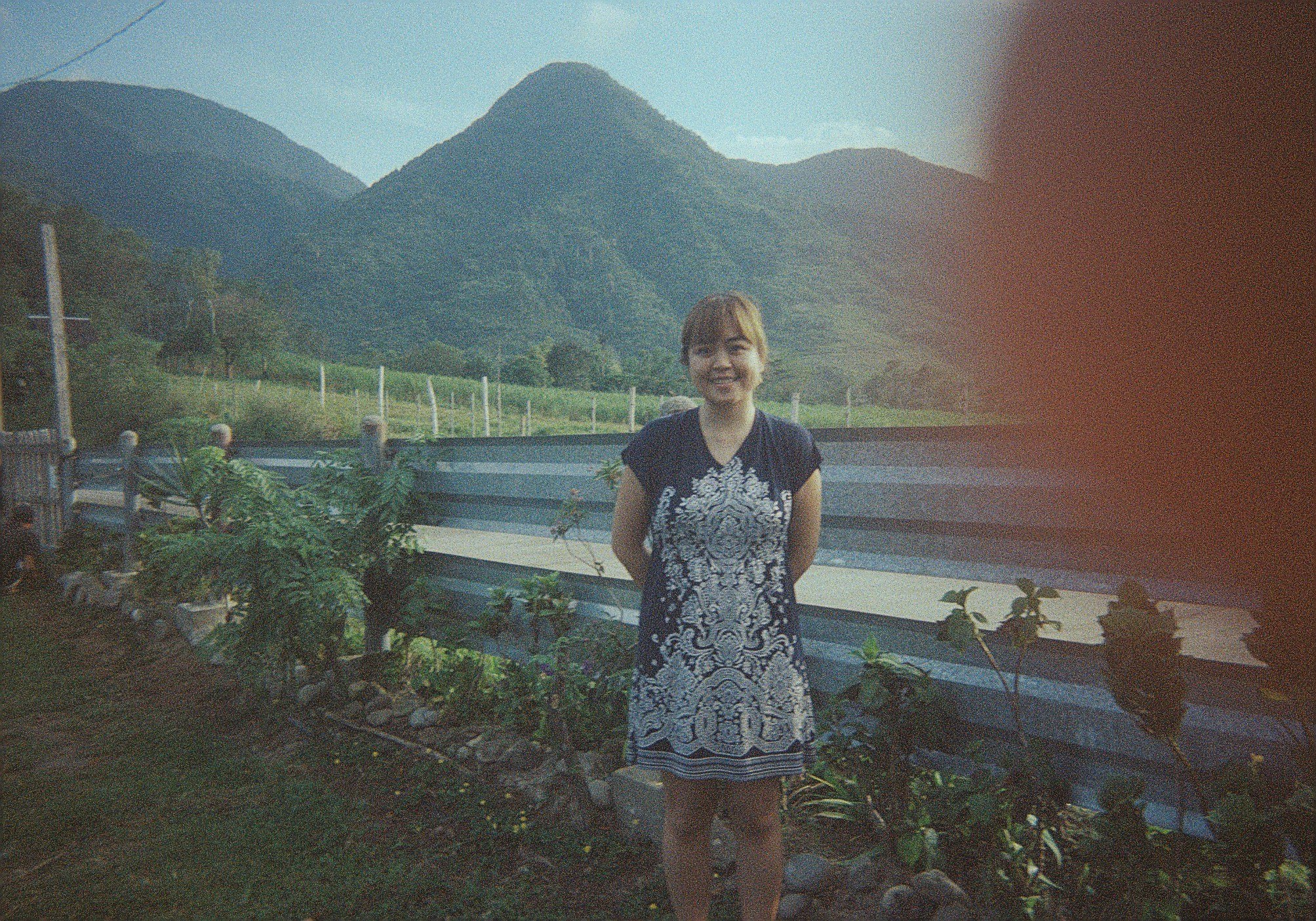
A film photograph when I first arrived in Negros, not knowing that one day, I would move here and build a life that would shape who I am today. Year: 2019. Photo Credit: Jel Suarez

This awareness also made me more conscious of what it means to be seen as someone from Manila. At times, I have been called an alog, a local slang term for a Tagalog woman, although the way it is spoken often has an undertone of ridicule. Labels emerge when people encounter someone they cannot easily place. I’ve learned to embrace the position, not necessarily as something that separates me from the place, but from a point of view through which I can better understand myself through all the complexities of belonging and identity.

My understanding of Philippine contemporary art had largely been shaped by the people I knew in Manila, by friendships and conversations that informed how I thought about making work. Encountering the practices of artists in Negros and its neighboring islands made me realize how deeply, our work, is shaped by the places we inhabit. The resources available to us, the audiences we imagine, and the forms of support we can access are never entirely independent of our surroundings. Even when we resist the circumstances we find ourselves in, traces of them find their way into our work.

What we carry across

I write this during the final week of a two-month artist residency in Japan, caught between the privilege of seeing the world and the knowledge that life, with all its responsibilities and aches, continues in my absence.

The five residencies made possible by the 2025 Ateneo Art Awards mean spending roughly six to eight months away from home over a two-year period. The months in between are spent either preparing to leave or readjusting to life at home once again. I am deeply grateful to my partner, who helps keep our life together by looking after our small cafe business while I am away. After all, an artist residency may offer time, space, and opportunity, but it does not necessarily come with a  monetary return.

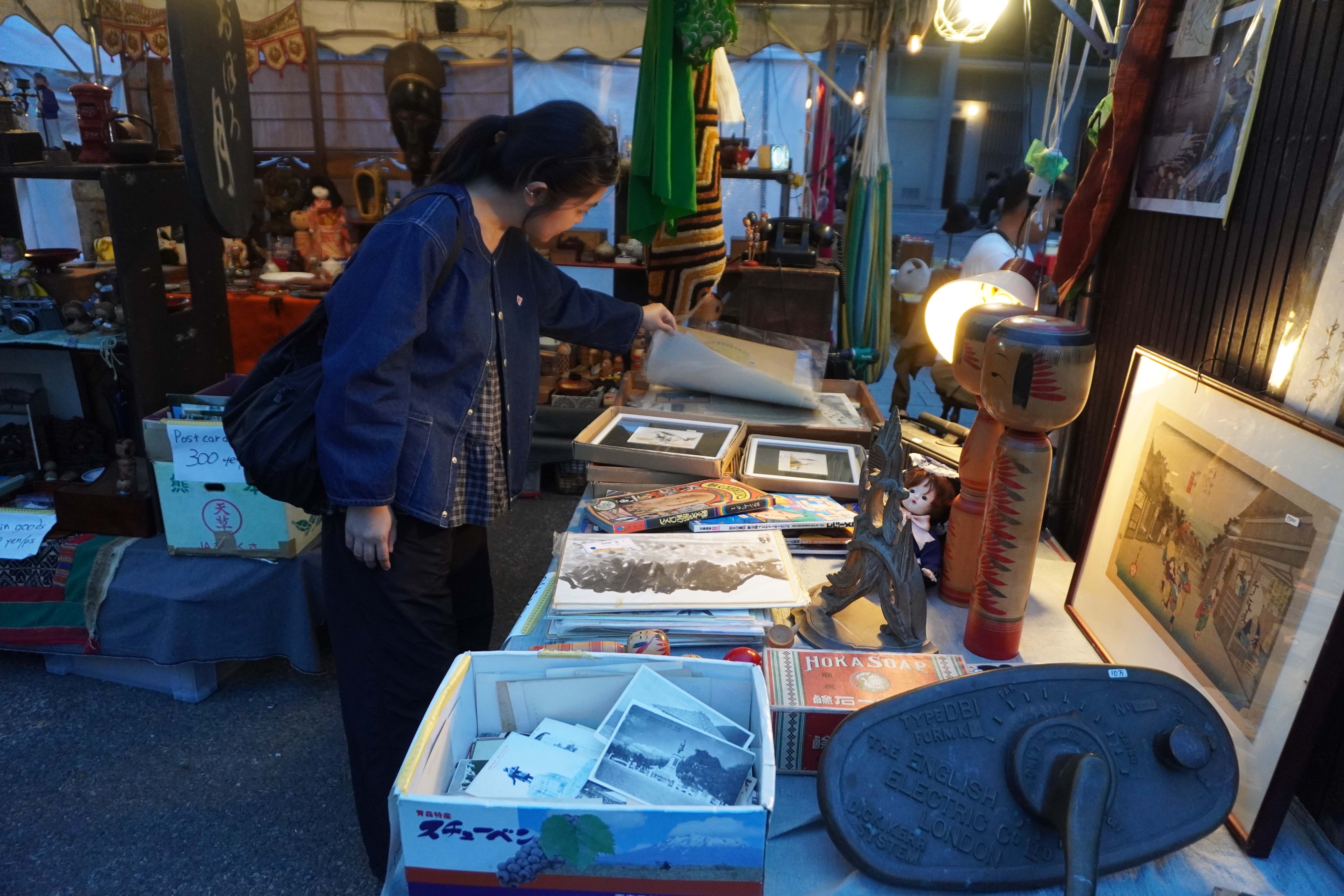
Exploring Japanese flea markets and the objects, curiosities, and ephemera found within them. Year: 2026. Photo Credit: Jel Suarez

There is an unspoken pressure to make something significant out of these movements and circulations: to produce work, to grow, and to return home with something tangible in exchange for the time spent away. But I have also had to confront carrying the worries of home while trying to find my footing in a foreign language and culture.

I suppose this is not so different from how I felt when I first arrived in Bacolod: that quiet pressure to make the move worthwhile, or to find something equally meaningful after leaving behind a familiar life.

I am trying to hold these experiences together, allowing myself to be present in the moment, grounding myself,while accepting that a part of me will always remain at home.
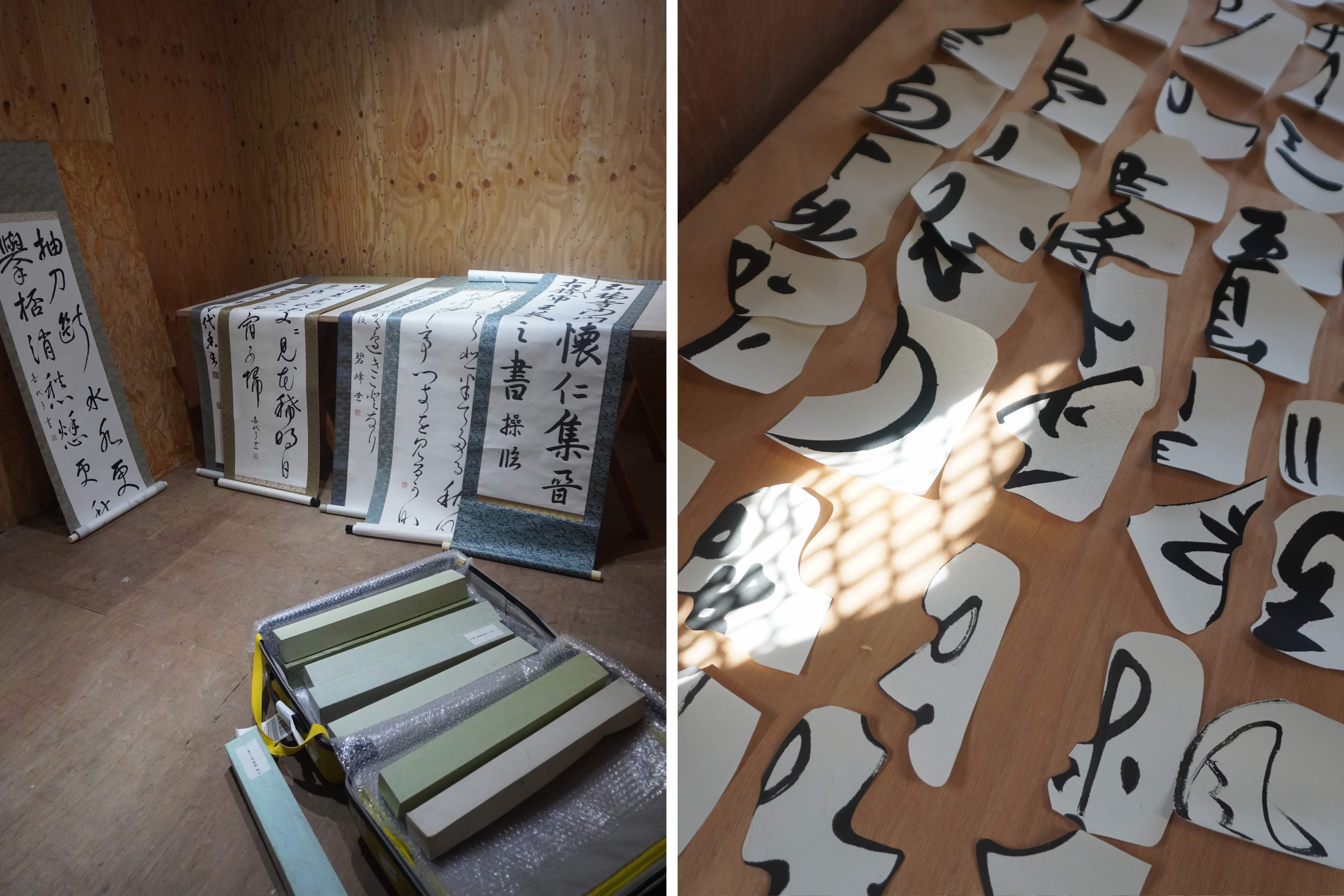
L: Japanese scrolls collected from various surplus shops in the Philippines and brought to my artist residency in Yokohama, Japan. R: Collage cut-outs from different Japanese scrolls accumulated during my artist residency in Koganecho Arts Management Center in Yokohama, Japan. Year: 2026. Photo Credit: Jel Suarez

During my open studio, I spoke about the surplus of objects from Japan that I collect and use in my work. I found myself thinking about how these objects change meaning as they move across borders, acquire different values, and are given another life when transported to different places and localities like  the Philippines. In some ways, I see myself in them. We both arrive carrying histories, languages, and stories that may not translate in the same way elsewhere. We are made unfamiliar by the very act of entering a new context, becoming something slightly different in the eyes of those who encounter us. Whether displaced by circumstance, opportunity, or the uncertain turns of life, we’re subject to the meanings that other places make of us.

Continuous movement

For years, I have felt suspended between places. Sometimes, I worry that this lingering melancholy shows and that I have yet to find a settled way of being rooted.  But I have also come to see this tension as something I do not necessarily need to resolve. The places I inhabit will continue to change me, just as I will carry traces of them wherever I go. I am learning to accept that I can belong to more than one place, even if that belonging looks different in each one. Maybe what matters is the continuous movement: what I carry with me and what becomes possible when I allow myself to remain somewhere in between.

Jel Suarez (b. 1990) is a visual artist based between Manila and Bacolod City. Working across collage, assemblage, and object making, she collects, deconstructs, and rearranges found materials as a way of reading and reinterpreting—using the materiality of obejcts to think through memory, identity and movement. Suarez is a recipient of the Thirteen Artists Awards (2024) and the Ateneo Art Awards - Fernando Zóbel Prizes for Visual Art (2025).

[order] => 0 [type] => blog_post [status] => published [created] => 2026-11-19 15:13:18 [modified] => 2026-11-19 15:45:59 [post_date] => 2026-11-19 15:13:00 [category_id] => 0 [parent_id] => 4 [parent_slug] => features [parent_title] => Features [author_id] => 46 [author_name] => JEL SUAREZ [first_name] => The Cartellino [last_name] => Team [username] => cartellino.art [nickname] => The Cartellino Team [metadata] => a:28:{s:10:"page_title";s:43:"

elsewhere, Becoming

";s:4:"tags";s:0:"";s:10:"source_url";s:0:"";s:7:"excerpt";s:0:"";s:11:"readability";s:0:"";s:14:"social_excerpt";s:0:"";s:5:"quote";s:0:"";s:11:"post_footer";s:0:"";s:13:"featured_post";s:1:"1";s:17:"featured_category";s:0:"";s:15:"featured_slider";s:0:"";s:14:"featured_quote";s:0:"";s:7:"comment";s:1:"1";s:10:"post_image";s:53:"uploads/2026/11/14d80b63995900c7edfb105c530fc348.jpeg";s:11:"post_image2";s:53:"uploads/2026/11/9cd8912a3f13a07e2af461dd7f819dcb.jpeg";s:11:"post_image3";s:53:"uploads/2026/11/3118e91e7d14372e11819c536fc38ccb.jpeg";s:9:"post_type";s:0:"";s:11:"artist_name";s:0:"";s:13:"duration_from";s:0:"";s:11:"duration_to";s:0:"";s:17:"short_description";s:0:"";s:12:"artist_label";s:16:"About the Artist";s:16:"about_the_artist";s:0:"";s:14:"catalogue_link";s:0:"";s:14:"featured_works";s:0:"";s:11:"author_name";s:10:"JEL SUAREZ";s:15:"event_date_from";s:19:"2026-11-19 15:45:59";s:13:"event_date_to";s:19:"2026-11-19 15:45:59";} [category_title] => [category_slug] => )

Elsewhere, Becoming

In the second release of Resonances, visual artist Jel Suarez traces the continual movements that have marked her life through the lens of her artistic practice. Having moved from Manila to Bacolod City, she reflects on the series of relocations and residencies she has undertaken over the years, and how these have implicitly shaped not only her artmaking but also her sense of identity—one shaped by belonging to multiple places at once, and by the possibility of a life made whole through the traces of the places we carry.

This installment of Resonances, a series of essays published alongside recently concluded and current exhibitions in our physical space, is released in parallel with Faye Abantao’s ongoing exhibition, “Elsewhere, Otherwise,” at Cartellino. Abantao is also based in Bacolod City.

People often romanticize the idea of leaving Manila and starting over somewhere else, as though moving away from the city lends a certain stature to a person in a new place. I guess there is something appealing about beginning again, about allowing an unfamiliar landscape to change the shape of who you are, or who you want to become.

But the reality of relocating to the province is far less romantic than the idea of arriving there and belonging to a place. Eventually, you are no longer a visitor whose presence sparks curiosity because of where you came from. You simply become someone trying to  create your own life, finding space among people whose histories existed long before you arrived.

Learning to be an outsider

I moved to Bacolod City in 2021, in the aftermath of the pandemic lockdown. I chose to follow love and build a life around the one thing that felt certain at a time when so little did.

Moving to a new city didn’t immediately ground my practice or give me a strong sense of connection with my surroundings. If anything, it made me conscious of my position as an outsider, and of the distinction between living somewhere and feeling rooted in it. This distance allowed me to remain attentive and critical without presuming familiarity, to acknowledge the limits of perceiving things, and to become aware of how my presence is perceived by others.

A film photograph when I first arrived in Negros, not knowing that one day, I would move here and build a life that would shape who I am today. Year: 2019. Photo Credit: Jel Suarez

This awareness also made me more conscious of what it means to be seen as someone from Manila. At times, I have been called an alog, a local slang term for a Tagalog woman, although the way it is spoken often has an undertone of ridicule. Labels emerge when people encounter someone they cannot easily place. I’ve learned to embrace the position, not necessarily as something that separates me from the place, but from a point of view through which I can better understand myself through all the complexities of belonging and identity.

My understanding of Philippine contemporary art had largely been shaped by the people I knew in Manila, by friendships and conversations that informed how I thought about making work. Encountering the practices of artists in Negros and its neighboring islands made me realize how deeply, our work, is shaped by the places we inhabit. The resources available to us, the audiences we imagine, and the forms of support we can access are never entirely independent of our surroundings. Even when we resist the circumstances we find ourselves in, traces of them find their way into our work.

What we carry across

I write this during the final week of a two-month artist residency in Japan, caught between the privilege of seeing the world and the knowledge that life, with all its responsibilities and aches, continues in my absence.

The five residencies made possible by the 2025 Ateneo Art Awards mean spending roughly six to eight months away from home over a two-year period. The months in between are spent either preparing to leave or readjusting to life at home once again. I am deeply grateful to my partner, who helps keep our life together by looking after our small cafe business while I am away. After all, an artist residency may offer time, space, and opportunity, but it does not necessarily come with a  monetary return.

Exploring Japanese flea markets and the objects, curiosities, and ephemera found within them. Year: 2026. Photo Credit: Jel Suarez

There is an unspoken pressure to make something significant out of these movements and circulations: to produce work, to grow, and to return home with something tangible in exchange for the time spent away. But I have also had to confront carrying the worries of home while trying to find my footing in a foreign language and culture.

I suppose this is not so different from how I felt when I first arrived in Bacolod: that quiet pressure to make the move worthwhile, or to find something equally meaningful after leaving behind a familiar life.

I am trying to hold these experiences together, allowing myself to be present in the moment, grounding myself,while accepting that a part of me will always remain at home.

L: Japanese scrolls collected from various surplus shops in the Philippines and brought to my artist residency in Yokohama, Japan. R: Collage cut-outs from different Japanese scrolls accumulated during my artist residency in Koganecho Arts Management Center in Yokohama, Japan. Year: 2026. Photo Credit: Jel Suarez

During my open studio, I spoke about the surplus of objects from Japan that I collect and use in my work. I found myself thinking about how these objects change meaning as they move across borders, acquire different values, and are given another life when transported to different places and localities like  the Philippines. In some ways, I see myself in them. We both arrive carrying histories, languages, and stories that may not translate in the same way elsewhere. We are made unfamiliar by the very act of entering a new context, becoming something slightly different in the eyes of those who encounter us. Whether displaced by circumstance, opportunity, or the uncertain turns of life, we’re subject to the meanings that other places make of us.

Continuous movement

For years, I have felt suspended between places. Sometimes, I worry that this lingering melancholy shows and that I have yet to find a settled way of being rooted.  But I have also come to see this tension as something I do not necessarily need to resolve. The places I inhabit will continue to change me, just as I will carry traces of them wherever I go. I am learning to accept that I can belong to more than one place, even if that belonging looks different in each one. Maybe what matters is the continuous movement: what I carry with me and what becomes possible when I allow myself to remain somewhere in between.

Jel Suarez (b. 1990) is a visual artist based between Manila and Bacolod City. Working across collage, assemblage, and object making, she collects, deconstructs, and rearranges found materials as a way of reading and reinterpreting—using the materiality of obejcts to think through memory, identity and movement. Suarez is a recipient of the Thirteen Artists Awards (2024) and the Ateneo Art Awards - Fernando Zóbel Prizes for Visual Art (2025).