
• Jul. 3, 2026
											stdClass Object
(
    [id] => 848
    [title] => 

Word for Word: Artist talk and conversation with Czar Kristoff J.P.

[slug] => 2026/07/03/Word-for-Word-Artist-talk-and-conversation-with-Czar-Kristoff-JP [body] =>

Last Saturday, April 25, 2026, Cartellino held an artist talk and conversation with artist, publisher, and facilitator Czar Kristoff J.P. The discussion with curator James Luigi Tana and members of the public opened with a survey of the artist’s early engagement with publications. He traced key moments in his practice, from his exposure to pasyón during his childhood in Camarines Sur—which sparked an initial interest in printed forms—to his first encounter with zines in 2011, and later, his involvement with Wawi Navarozza’s photobook library Thousandfold beginning in 2015.

More than a decade on, Czar reflected on his work with independent publications largely beyond the gallery context. Central to this is the role of locality in shaping his practice, seen in forms such as the looming threat of erasure amid the typhoon-prone conditions of Camarines Sur, and the necessity of cultivating trust and sustaining relationships with suppliers and collaborators within one’s immediate community. Together, these coalesce into what he describes as a “constellation of memories and relationships” that continuously guides his navigation of the world. The program concluded with the formal launch of an anthology of the artist’s previous publications, available for purchase at Cartellino.

Selected excerpts from the artist talk and conversation may be read below: 

Artist, publisher, and facilitator Czar Kristoff J.P. at the artist talk and conversation held last April 25, 2026 at Cartellino

Czar Kristoff J.P.: 

¿Arin pa ang hilingon co
orog cagayon sa Mundo,
cundi ining Aqui mo,
quiniquilic co igdiho
idinolot saimo?

Before I proceed with the presentation of Select Publications 2015-2025, I would like to share my early memories of printer matter. 

I was born and raised in Camarines Sur and Bicol ‘pasyon’ is a huge part of my upbringing. Pasyon is a traditional chanted narrative of Jesus’s life, death, and resurrection performed during Semana Santa. The lyrics or text are written in stanzas of five lines with eight syllables each, printed offset on simple paper stock. Once a year, the pasyon book is activated through the voices of women and occasionally men, chanting in pairs or trios that can last up to 24 hours. Here’s an example:

Growing up, I never thought of pasyon beyond its usual purpose but in retrospect, it introduced me that a book can be a site for collective transcendence. It brings together family and relatives across generations, as well as the immediate community and neighbors. Listening, singing, and eating simple food while connecting simultaneously to their individual memory of the pasyon. 

I attended a public elementary school. We may have lacked facilities like air-conditioning, projectors, or even a covered court, but our school took great pride in the achievements of its students. We regularly competed in regional contests focused in sports, literature, general education, art and music. 

These moments were documented in our school paper, D’FES Torch (FES is the acronym of our school). Edited by our teachers Mrs. Guia and Mrs. Camama who worked closely with the student contributors. The school paper publishes two issues per year and was printed using black and green ink on 70-80 gsm recycled paper. It was sustained through the generosity of parents, alumni and small contributions from students themselves.

Two years ago, Mrs. Camama handed me a collection of D’FES Torch published between 1997 and 2014. While browsing through its pages, I was reminded of the importance of archiving. Stories of triumphs, tenderness and everyday life, told through the lens of children from the Poblacion, the umahan of Camambugan and from the community of Basud, continue their life cycle because of the efforts of our former teacher.

This act of preservation is important in Bicol, since the region faces nearly half of the approximately twenty typhoons that pass through the Philippines each year. Archives are always on the edge of loss. While I agree that digitization is not synonymous with archiving, simply converting ink on paper into pixels can never fully capture the spirit of a publication, it nonetheless remains an important form of preservation. For communities and households, without access to climate-controlled storage and facilities, digitization is often the most practical and accessible way of safekeeping memories that are constantly under threat of erasure.

Digitized front pages of D’FES Torch, presented by Czar during the talk and conversation

I had never heard of the term zine until 2011. It was my friend Jolo, whom I met at the San Pedro town plaza through skateboarding, who introduced me to this form of publication. He brought a small collection of zines he had picked up from his punk and hardcore gigs back in 2003-2007, if I remember correctly. Not this exact issue, but here's an example of the kind of zine for those who have never encountered one before. This was published in 1987.

Then in 2013, I came across the work of Charles Buenconsejo. He had just released Nothing Is Nothing under Saturnino Basilla, which is a small press. It consists of photographs printed in black ink on letter size paper, folded crosswise. Despite its simplicity in design and material, it remains one of my favorite artist publications in my collection. 

Two years later, in 2015, I met lens-based artist Wawi Navarozza through one of her photography salons. That meeting eventually led to an invitation to participate in Thousandfold, a platform dedicated to contemporary photography and photobooks in the Philippines. Through Thousandfold, I co-produced my first artist publication, Fugue. It was made during the summer of 2015, naively edited and produced. Yet, I consider it as a milestone in my life. 

During one of our early exchanges on Facebook, editor/publisher/designer/cultural worker Clara Balaguer who would later become a frequent collaborator told me that publishing requires a lot of legwork. She was absolutely right. Editing and proofreading are only the tip of the iceberg. Independent publishing demands physical movement, commuting to meet collaborators and suppliers, sourcing materials, assembling pages, coordinating with printers, and building trust with everyone involved in the process. Even producing a very small edition requires an extraordinary amount of labor.

“The way we spend time often speaks volumes for the strangeness of modern life. Not only does “nobody have time” in today’s era of global speed (and no one is so poor in time as the one who has forgotten how to live as our elders remind us) but it is also true that literally, we cannot have time because we are time.”
Trinh T. Minh-Ha, Rhythm At Play, I Will Draw A Map Of What You Never See, 2019

The majority of my publications are produced and assembled in San Pedro, Laguna, where I currently live. I source most of my paper from local school and office supply stores such as Pen Plus, Lily's, Pandayan, among others, and I work with small printing shops around the neighborhood. Some print receipts and blueprints for local businesses, while others produce school projects, student theses, and other everyday printing needs. I have always been aware of their limitations. Yet my determination to bring my work beyond the screen and the white walls of galleries, together with the realities of my limited resources, taught me to embrace those constraints and run with it. Collaborating (and negotiating) with local printers over the past ten years has been one of the greatest joys of my publishing practice despite how exhausting it is. Not only because they help me materialize my projects, these printers also teach me a lot of lessons, shaping how I look at design and publishing. One of the things I learned from them is that errors will always be part of the book making process.

Local school and office supply stores collaborating with Czar, presented during the talk and conversation

I would say that my first publication, Fugue (2015), was a memorial to the relationships I wasn't able to sustain. At the same time, it marked the beginning of a much longer journey toward understanding what it means to be in relationship with others, with places, and with myself.

This self-initiated survey, Select Publications 2015–2025, has been an emotional process because it required me to revisit those relationships and the memories attached to each publication. I am grateful to the Cartellino team, James Tana, Geri Gonzales, and Kuya Lawrence, for their immense support in constructing this book and their patience to understand my practice. 

To produce the anthology, I selected two or three spreads from every book and reproduced them directly on a laser copier, choosing the color settings page by page. The spreads are printed on acid-free paper, the first time I have worked with both this paper stock and this particular printer. Usually, I remain at a distance while printers operate the machine, as clients are not allowed to touch it. This time, however, I stood in front of the copier myself, reproducing my own books.

After printing, I sorted and assembled every copy individually. The pages are sequenced differently in each edition, and the book can be opened from either the left or the right. There is no fixed beginning or ending. Instead, each copy unfolds this constellation of images, texts, places, and the countless acts of labor that brought these publications into life. More than a survey of the books I have made over the past decade, Select Publications 2015–2025 is an archive of relationships. 

The books featured in Select Publications 2015-2025 were: Fugue (2015), Ephemeral Motives (2015), Configurations (2016), Disinformation Express (2017), New Refuge (2018 version), Part Wall, Part Door, Part 1 & 2 (2018), General Assembly (2018), Develop, Fix (2019), There Is No Impression Constant and Variable (2019), Part Wall, Part Door, Part Three (2020), Form Studies (2020), To Destroy Is To Build (2021), New Refuge (2022), Sunset Garden (2022), Touch By Touch (2023), Bahay/Abog/Bale/Harong/Balay (2025), Sticker Landscapes (2025), All Time Favorite (2025) and Gintong Silahis (2025).

Browsing copy of Select Publications 2015-2025

The following section shows excerpts from the open conversation with the audience:

Audience: How do you see the significance of artist publication in the Filipino art landscape? I know that you've also published some works outside. What do you think is the difference, how was it received outside and how have your publications been received here in the local context?

CKJP: I started making artist publications at the same time I entered the gallery world in 2014. While I see the value in exhibition making, I also became aware of their limits, who gets access, who gets visibility, and how slowly opportunities can unfold. Artist publishing became a way for me to reclaim my agency and time. Instead of waiting for galleries or institutions to make space for me, what I did is I began creating my own space through printed matter.

Many artists and cultural workers that came before me have used publishing as a tool to mirror realities, as a form of resistance, to build communities, to educate, to archive, to play and experiment. We have seen this with mosquito presses during Martial Law era, in the 70s during the rise of conceptual art movement in the Philippines, the underground music scene in the 80s-2000s and their zine swapping culture. And the spirit of independent publishing continues through the work of Gantala Press, the publishers who participate at BLTX (Better Living Through Xeroxography), Paper Trail Projects, Library Una, Hardworking Goodlooking, Mako Micro Press, Magpies Press, Everything’s Fine, Saturnino Basilla, Lena Cobangbang, Studio Soup Zine Library, Kaon-Kaon, ipo-ipo projects, Panay Island Sound System, Komiket, among others. And I know there are many more artist publishers beyond my radar.

If it is only free to dream, I would love to see our institutions expand their understanding of artistic production. Beyond exhibitions, awards, biennales, I hope they also invest in publications, not only beautifully hardbound books, but also artist or designer publishing projects, zines, posters, newsletters, and pamphlets that can circulate widely through cities, towns, schools, libraries, and public spaces. And I hope this doesn't happen only in Manila but also through regional institutions across the country. It would be nice if more people have access to printed matter in the hope to imagine different futures.

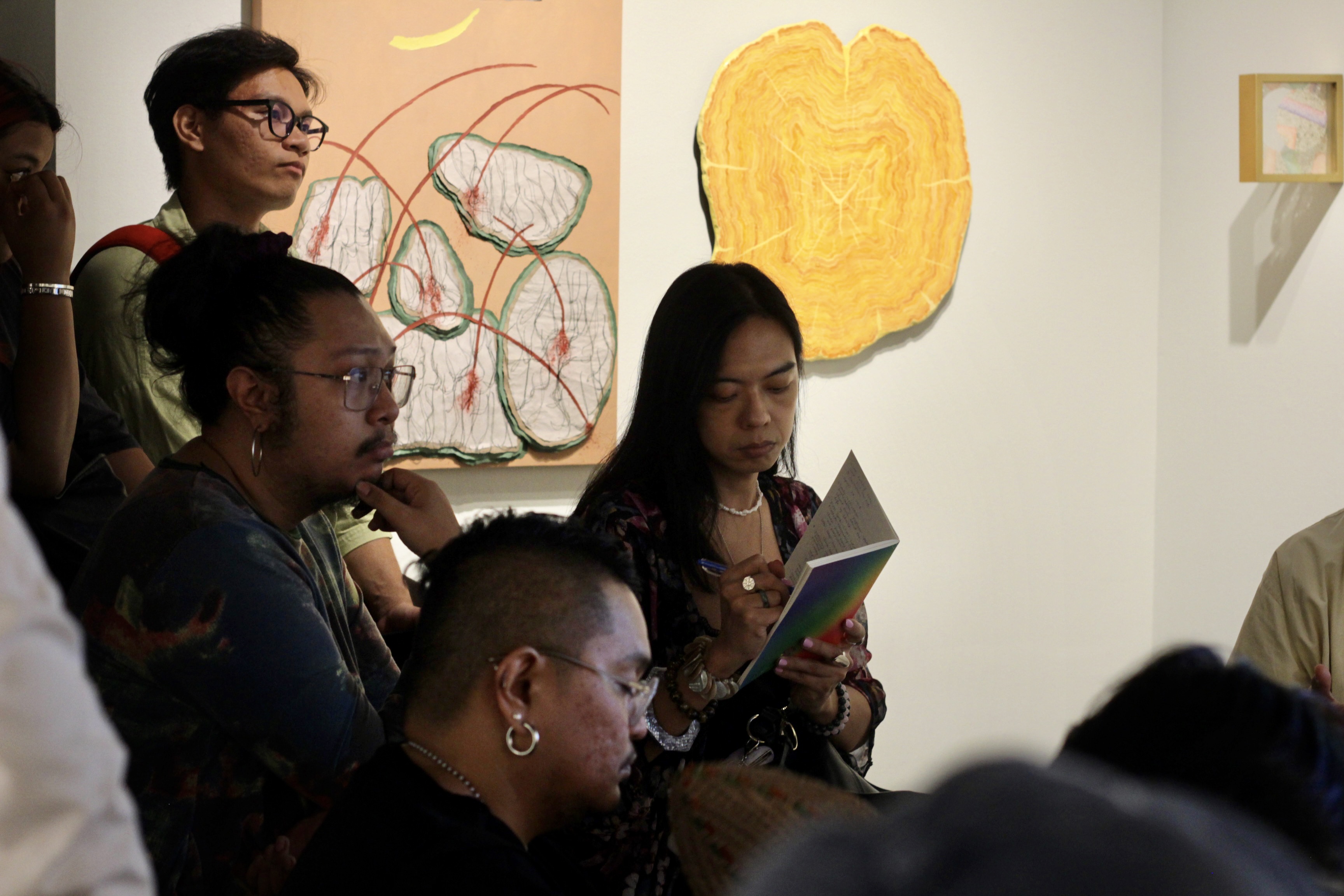
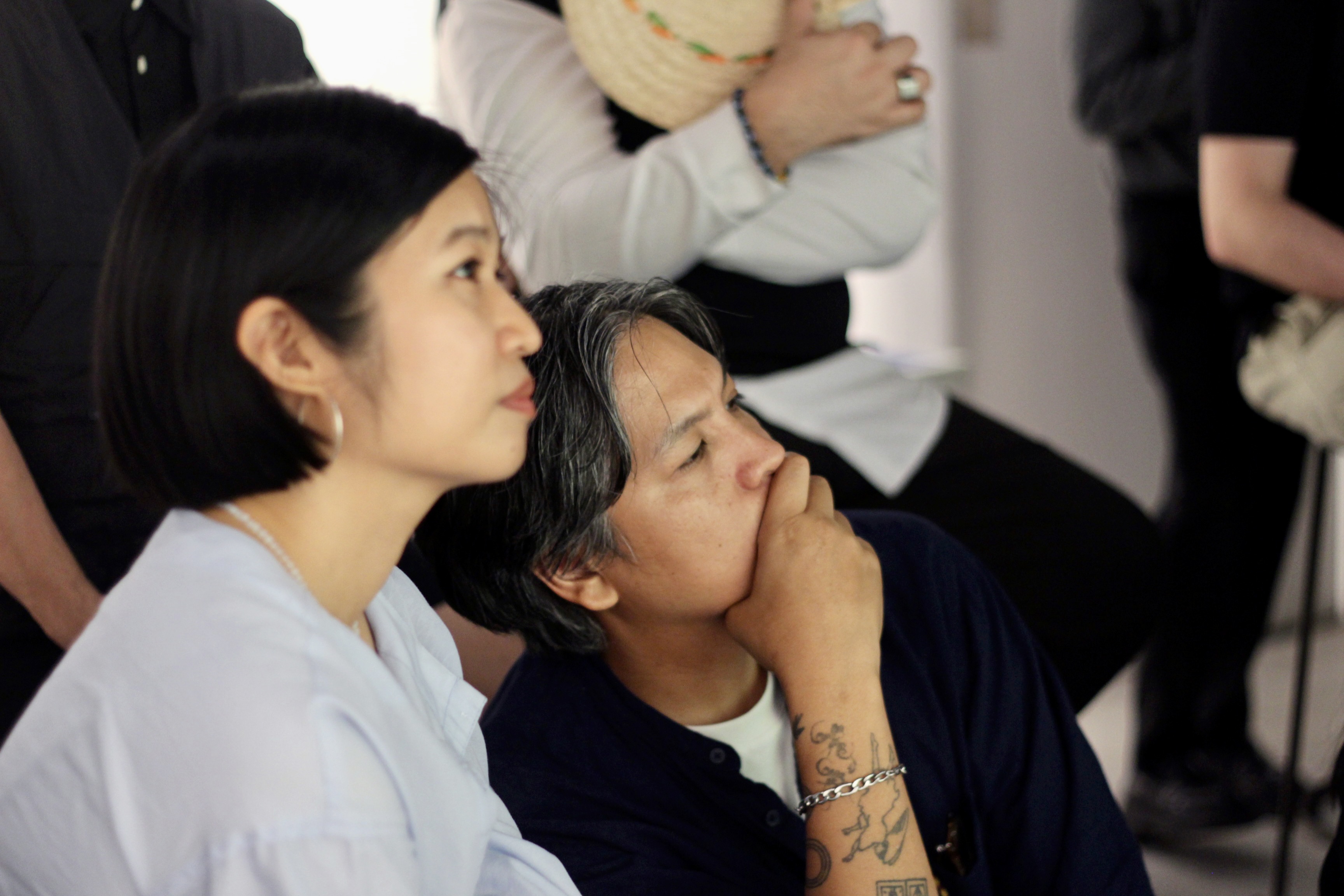
Audience members

As for your second question, my experience publishing abroad changed the way I think about circulation. One example is New Refuge (2022), published by Temporary Press. The original version existed as a unique artist's book that was exhibited in a gallery in 2018. In 2022, it was reimagined as an edition of several hundred copies. For the first time, I witnessed the work travel beyond what I had imagined, reaching readers in different cities and different cultural contexts. 

Another publication that traveled widely was To Destroy Is To Build. Unlike New Refuge, it was intentionally simple: a forty-page offset-printed booklet on inexpensive paper that resembled architectural blueprints. Right before the lockdown in 2020, I printed several hundred copies here in the Philippines, and relied on my network of friends and collaborators to help distribute them. That publication not only generated income during a difficult period, but it also went on to be shortlisted for Foam Talent in 2022. It was an interesting realization that a publication doesn't have to be expensive to produce in order to have an impact. 

Of course, circulation also depends on many practical realities. Some books require an explanation because they deal with abstract ideas. At international book fairs, I often spend hours talking to visitors about the work. Although exhausting, those conversations also become part of the process as it helps me better understand my own books. Here in the Philippines, the dynamic is different. Readers often prefer discovering publications on their own rather than through a sales pitch. This is only based on my experience. :-)

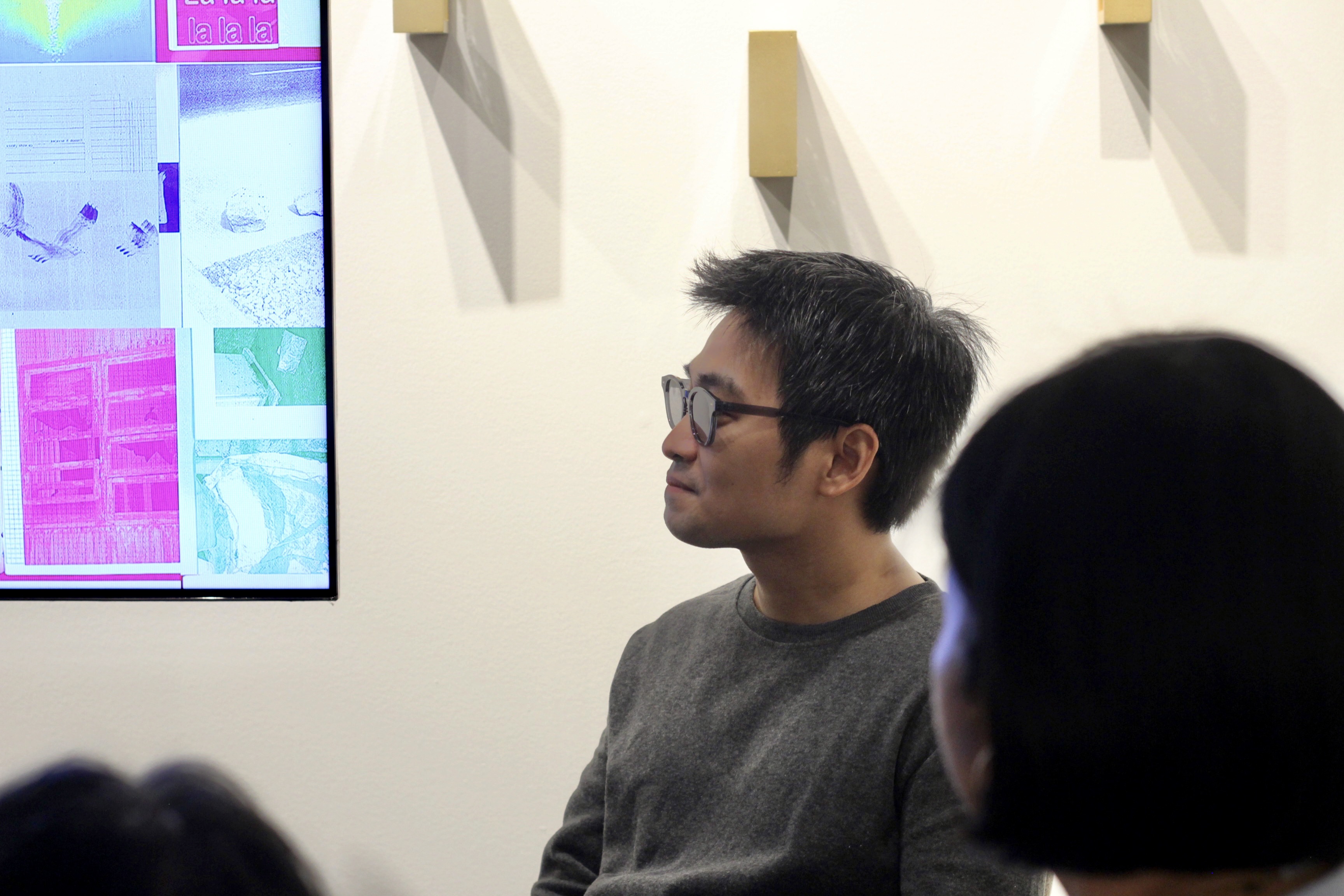
Curator James Luigi Tana, who facilitated the talk and conversation

James Luigi Tana: I want to highlight your statement on negotiation and building relationships. Maybe you can elaborate on this idea of relationship-building through prints, through collaboration with local printers, local individuals that influenced this kind of production-based practice. 

CKJP: What I mean by this is that you can never make a book alone. I get the idea of DIY (do-it-yourself) but, in reality, constructing a book requires a lot of moving parts. Even though my name is in front of the cover, every publication is the result of people I worked with.

When making a book, it requires trusted suppliers for paper, a reliable printer, binder, and trimmer—if you are outsourcing it. Once the book is finished, the work continues with couriers, distributors, and booksellers who help your book to circulate. You also need librarians to take good care of your book for institutional archives and collections, for the afterlife of the book once the circulation stops. You also need a support group, your fellow artist publishers and friends, for grounding the self and your project.

My decision to produce most of my books within my neighborhood was initially a practical choice. It was simply easier to work with people I am familiar with, move the materials around in the streets I know and keep production cost manageable. At the same time, it allowed me to support local businesses. 

Two years ago, I decided to expand my publishing practice by editing this series called MAPA atbp. published under pook aralan unrelearning and ipo-ipo projects (founded by Kristian Henson and Monica Ramos). It featured the work of artists like Franco Mamaril, Isola Tong, Jepren Solis, Alfred Marasigan. With the understanding that we all came from different backgrounds, disciplines, and ways of working, I expected that there would be challenges and conflict. I think in every collaboration, this is pretty normal, as long as all participants of the project are in sync with our intention why we are making this project. Communication, empathy, respect, trust, are things that are also important, beyond a successful book. 

Audience members

JLT: Is it also a question of access? The materials, resources, economically?

CKJP: Definitely. Access is a huge part of it. When I started, I didn't have the resources to work with specialized printers or expensive production facilities. I could only work with what was available in San Pedro and nearby areas.

Yes, it seems like it did limit the growth of my publishing practice, but I also want to acknowledge that they somehow shaped the visual language of my publications. The kinds of paper I could afford, the printing technologies that were available, even the production methods, all of these influenced the final form of the books.

JLT: I also like the term 'constellation of text and images' that you used earlier. How do you think the idea of collective memory translates into your anthology? How do you choose the images, or form the constellation, that will go to this anthology?

CKJP: Instead of arranging the publications chronologically or trying to present a complete history, I selected two or three spreads from each book that captured a particular moment, feeling, or questions that was important to me at the time. I wasn't interested in building a linear timeline. I was interested in allowing these fragments to echo one another.

The decision to leave the anthology unbound was also intentional. Each spread overlaps with another, creating an accordion-like form, but every page can also be separated, rearranged, or even displayed on its own. I wanted the physical structure of the publication to reflect how memory operates. Through reading other books and thinking about the relationship between memory, place, and time, I became interested in the idea that memory is never fixed or complete. Some memories remain vivid, others become fragmented, while others disappear altogether.

That's why there is no correct sequence to this anthology. Every reader can arrange the pages differently, constructing their ideal timeline or interpretation of time. In doing so, they bring their own memories and associations into the publication. The anthology becomes less a record of my past and more a shared space where my experiences intersect with those of the reader.

Looking back over ten years of work which I believe is not that long, I wasn't trying to produce a definitive retrospective. I was trying to recognize recurring rhythms, ideas, relationships, images, and questions that kept returning even when I thought I fully understood the reason for it.

This article marks the first release of Word for Word, a series of transcriptions of public programs, including artist talks, conversations, and walkthroughs, by Cartellino

Text edited by the artist for clarity.

[order] => 0 [type] => blog_post [status] => published [created] => 2026-07-03 13:13:16 [modified] => 2026-07-03 19:46:54 [post_date] => 2026-07-03 13:13:00 [category_id] => 0 [parent_id] => 4 [parent_slug] => features [parent_title] => Features [author_id] => 46 [author_name] => THE CARTELLINO TEAM [first_name] => The Cartellino [last_name] => Team [username] => cartellino.art [nickname] => The Cartellino Team [metadata] => a:28:{s:10:"page_title";s:91:"

word For Word: Artist Talk And Conversation With Czar Kristoff J.p.

";s:4:"tags";s:0:"";s:10:"source_url";s:0:"";s:7:"excerpt";s:0:"";s:11:"readability";s:0:"";s:14:"social_excerpt";s:0:"";s:5:"quote";s:0:"";s:11:"post_footer";s:0:"";s:13:"featured_post";s:1:"1";s:17:"featured_category";s:0:"";s:15:"featured_slider";s:0:"";s:14:"featured_quote";s:0:"";s:7:"comment";s:1:"1";s:10:"post_image";s:52:"uploads/2026/07/5d2aacf09720ce4c4100fd07f5d4e6e4.JPG";s:11:"post_image2";s:52:"uploads/2026/07/e5f4aae67cb598189e40c08220e9d31c.JPG";s:11:"post_image3";s:52:"uploads/2026/07/057a2dd2f8161e48497fdc430c80c90a.JPG";s:9:"post_type";s:0:"";s:11:"artist_name";s:0:"";s:13:"duration_from";s:0:"";s:11:"duration_to";s:0:"";s:17:"short_description";s:0:"";s:12:"artist_label";s:16:"About the Artist";s:16:"about_the_artist";s:0:"";s:14:"catalogue_link";s:0:"";s:14:"featured_works";s:0:"";s:11:"author_name";s:19:"THE CARTELLINO TEAM";s:15:"event_date_from";s:19:"2026-07-03 19:46:54";s:13:"event_date_to";s:19:"2026-07-03 19:46:54";} [category_title] => [category_slug] => )

Word for Word: Artist talk and conversation with Czar Kristoff J.P.

Last Saturday, April 25, 2026, Cartellino held an artist talk and conversation with artist, publisher, and facilitator Czar Kristoff J.P. The discussion with curator James Luigi Tana and members of the public opened with a survey of the artist’s early engagement with publications. He traced key moments in his practice, from his exposure to pasyón during his childhood in Camarines Sur—which sparked an initial interest in printed forms—to his first encounter with zines in 2011, and later, his involvement with Wawi Navarozza’s photobook library Thousandfold beginning in 2015.

More than a decade on, Czar reflected on his work with independent publications largely beyond the gallery context. Central to this is the role of locality in shaping his practice, seen in forms such as the looming threat of erasure amid the typhoon-prone conditions of Camarines Sur, and the necessity of cultivating trust and sustaining relationships with suppliers and collaborators within one’s immediate community. Together, these coalesce into what he describes as a “constellation of memories and relationships” that continuously guides his navigation of the world. The program concluded with the formal launch of an anthology of the artist’s previous publications, available for purchase at Cartellino.

Selected excerpts from the artist talk and conversation may be read below: 

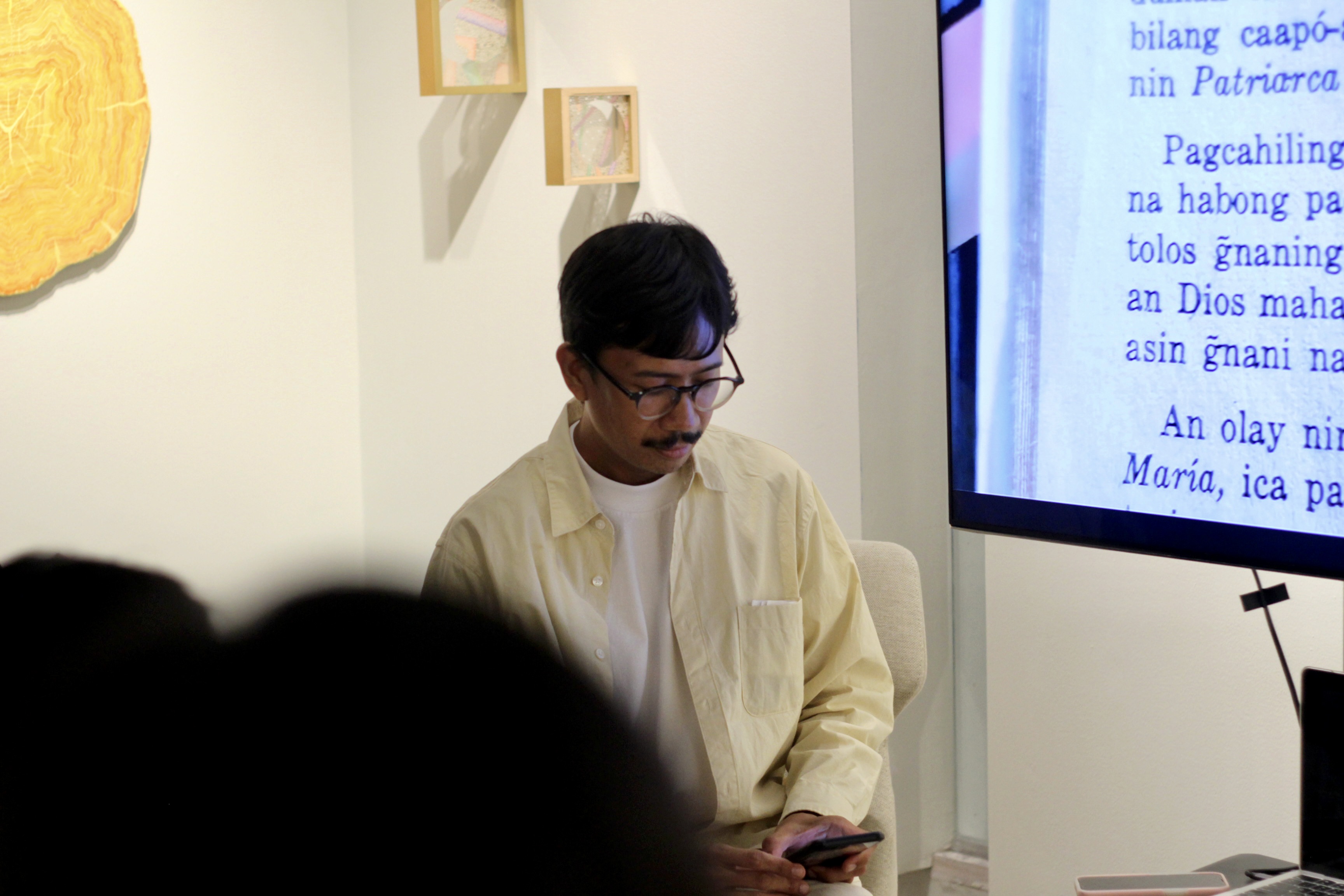
Artist, publisher, and facilitator Czar Kristoff J.P. at the artist talk and conversation held last April 25, 2026 at Cartellino

Czar Kristoff J.P.: 

¿Arin pa ang hilingon co
orog cagayon sa Mundo,
cundi ining Aqui mo,
quiniquilic co igdiho
idinolot saimo?

Before I proceed with the presentation of Select Publications 2015-2025, I would like to share my early memories of printer matter. 

I was born and raised in Camarines Sur and Bicol ‘pasyon’ is a huge part of my upbringing. Pasyon is a traditional chanted narrative of Jesus’s life, death, and resurrection performed during Semana Santa. The lyrics or text are written in stanzas of five lines with eight syllables each, printed offset on simple paper stock. Once a year, the pasyon book is activated through the voices of women and occasionally men, chanting in pairs or trios that can last up to 24 hours. Here’s an example:

Growing up, I never thought of pasyon beyond its usual purpose but in retrospect, it introduced me that a book can be a site for collective transcendence. It brings together family and relatives across generations, as well as the immediate community and neighbors. Listening, singing, and eating simple food while connecting simultaneously to their individual memory of the pasyon. 

I attended a public elementary school. We may have lacked facilities like air-conditioning, projectors, or even a covered court, but our school took great pride in the achievements of its students. We regularly competed in regional contests focused in sports, literature, general education, art and music. 

These moments were documented in our school paper, D’FES Torch (FES is the acronym of our school). Edited by our teachers Mrs. Guia and Mrs. Camama who worked closely with the student contributors. The school paper publishes two issues per year and was printed using black and green ink on 70-80 gsm recycled paper. It was sustained through the generosity of parents, alumni and small contributions from students themselves.

Two years ago, Mrs. Camama handed me a collection of D’FES Torch published between 1997 and 2014. While browsing through its pages, I was reminded of the importance of archiving. Stories of triumphs, tenderness and everyday life, told through the lens of children from the Poblacion, the umahan of Camambugan and from the community of Basud, continue their life cycle because of the efforts of our former teacher.

This act of preservation is important in Bicol, since the region faces nearly half of the approximately twenty typhoons that pass through the Philippines each year. Archives are always on the edge of loss. While I agree that digitization is not synonymous with archiving, simply converting ink on paper into pixels can never fully capture the spirit of a publication, it nonetheless remains an important form of preservation. For communities and households, without access to climate-controlled storage and facilities, digitization is often the most practical and accessible way of safekeeping memories that are constantly under threat of erasure.

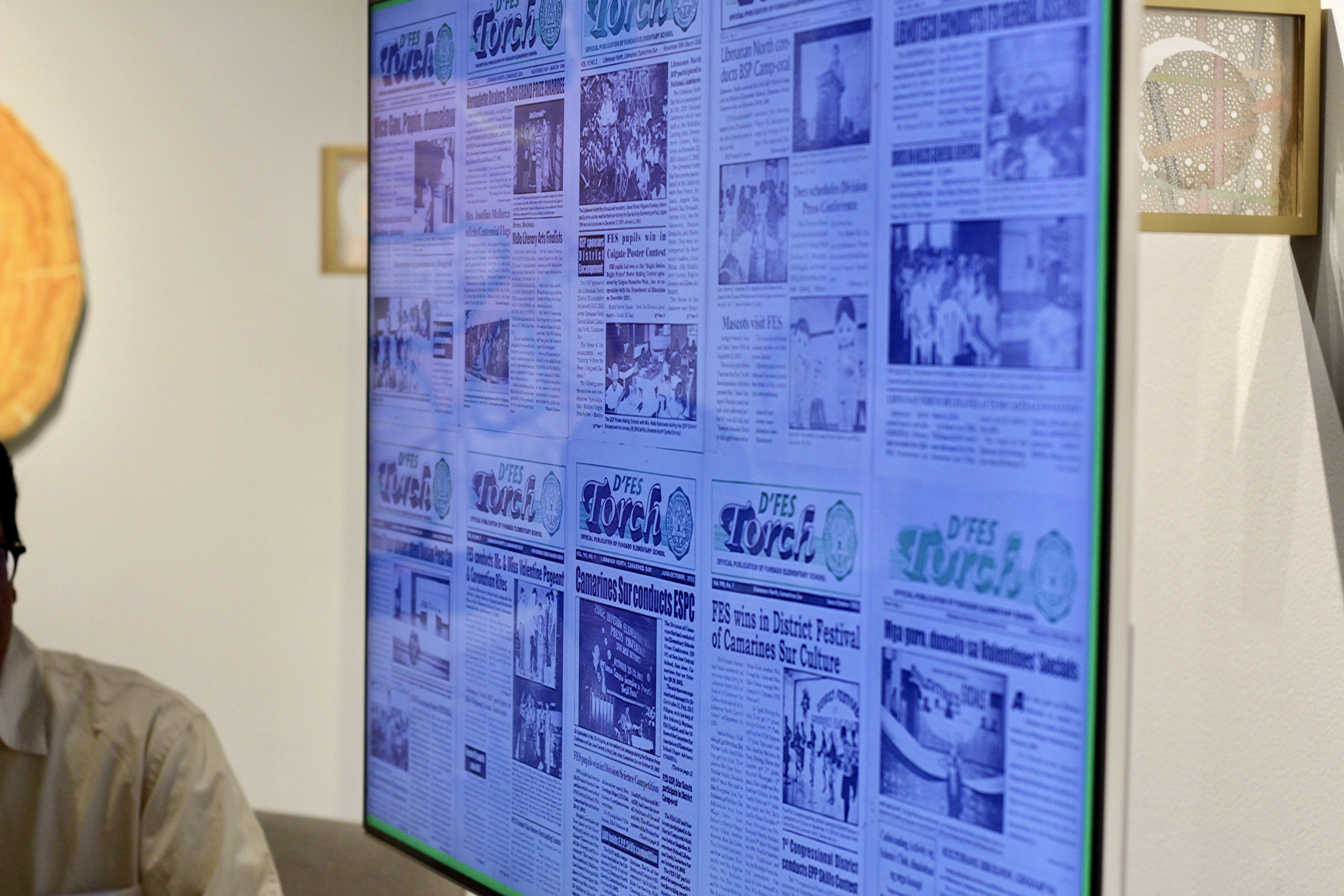
Digitized front pages of D’FES Torch, presented by Czar during the talk and conversation

I had never heard of the term zine until 2011. It was my friend Jolo, whom I met at the San Pedro town plaza through skateboarding, who introduced me to this form of publication. He brought a small collection of zines he had picked up from his punk and hardcore gigs back in 2003-2007, if I remember correctly. Not this exact issue, but here's an example of the kind of zine for those who have never encountered one before. This was published in 1987.

Then in 2013, I came across the work of Charles Buenconsejo. He had just released Nothing Is Nothing under Saturnino Basilla, which is a small press. It consists of photographs printed in black ink on letter size paper, folded crosswise. Despite its simplicity in design and material, it remains one of my favorite artist publications in my collection. 

Two years later, in 2015, I met lens-based artist Wawi Navarozza through one of her photography salons. That meeting eventually led to an invitation to participate in Thousandfold, a platform dedicated to contemporary photography and photobooks in the Philippines. Through Thousandfold, I co-produced my first artist publication, Fugue. It was made during the summer of 2015, naively edited and produced. Yet, I consider it as a milestone in my life. 

During one of our early exchanges on Facebook, editor/publisher/designer/cultural worker Clara Balaguer who would later become a frequent collaborator told me that publishing requires a lot of legwork. She was absolutely right. Editing and proofreading are only the tip of the iceberg. Independent publishing demands physical movement, commuting to meet collaborators and suppliers, sourcing materials, assembling pages, coordinating with printers, and building trust with everyone involved in the process. Even producing a very small edition requires an extraordinary amount of labor.

“The way we spend time often speaks volumes for the strangeness of modern life. Not only does “nobody have time” in today’s era of global speed (and no one is so poor in time as the one who has forgotten how to live as our elders remind us) but it is also true that literally, we cannot have time because we are time.”
Trinh T. Minh-Ha, Rhythm At Play, I Will Draw A Map Of What You Never See, 2019

The majority of my publications are produced and assembled in San Pedro, Laguna, where I currently live. I source most of my paper from local school and office supply stores such as Pen Plus, Lily's, Pandayan, among others, and I work with small printing shops around the neighborhood. Some print receipts and blueprints for local businesses, while others produce school projects, student theses, and other everyday printing needs. I have always been aware of their limitations. Yet my determination to bring my work beyond the screen and the white walls of galleries, together with the realities of my limited resources, taught me to embrace those constraints and run with it. Collaborating (and negotiating) with local printers over the past ten years has been one of the greatest joys of my publishing practice despite how exhausting it is. Not only because they help me materialize my projects, these printers also teach me a lot of lessons, shaping how I look at design and publishing. One of the things I learned from them is that errors will always be part of the book making process.

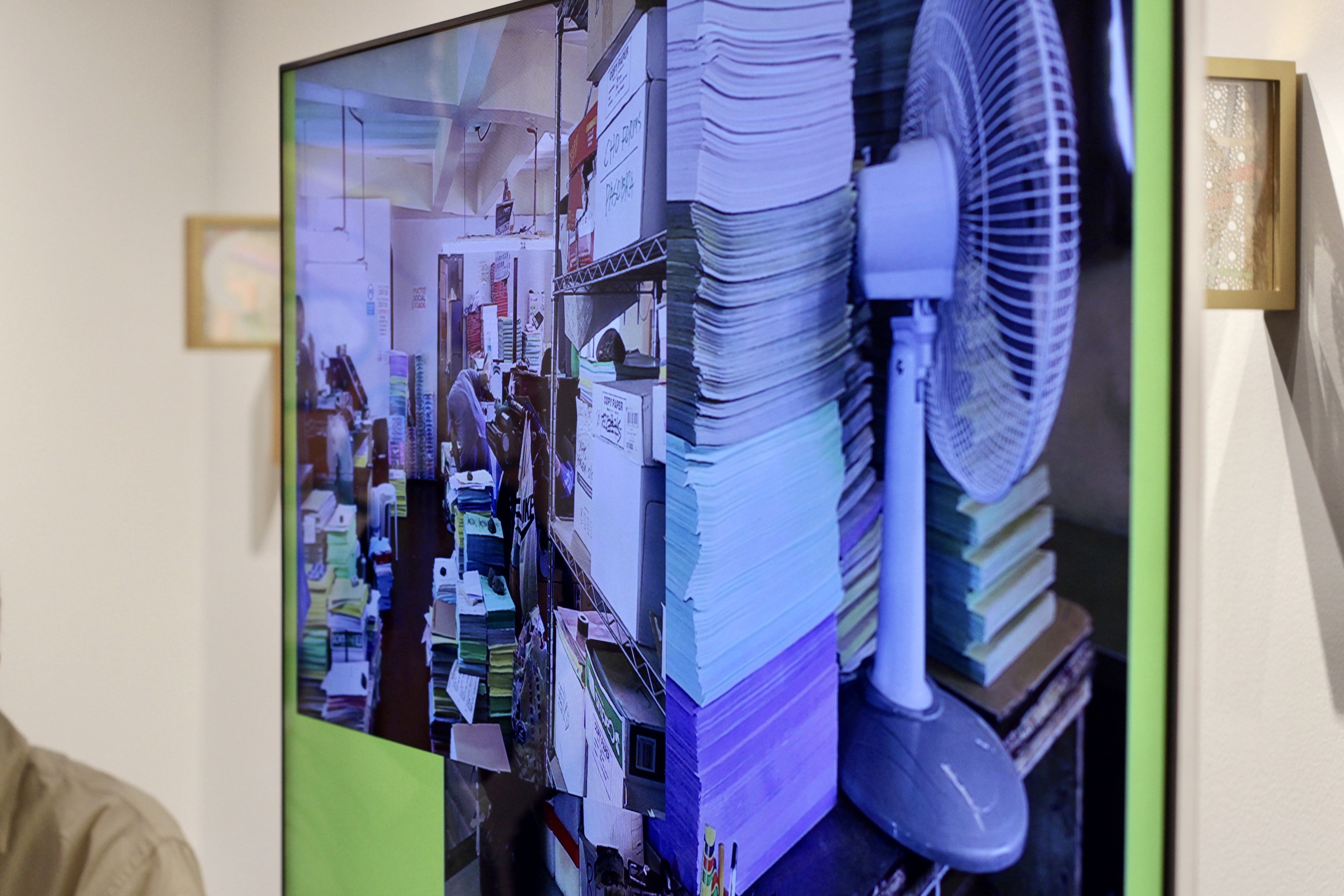
Local school and office supply stores collaborating with Czar, presented during the talk and conversation

I would say that my first publication, Fugue (2015), was a memorial to the relationships I wasn't able to sustain. At the same time, it marked the beginning of a much longer journey toward understanding what it means to be in relationship with others, with places, and with myself.

This self-initiated survey, Select Publications 2015–2025, has been an emotional process because it required me to revisit those relationships and the memories attached to each publication. I am grateful to the Cartellino team, James Tana, Geri Gonzales, and Kuya Lawrence, for their immense support in constructing this book and their patience to understand my practice. 

To produce the anthology, I selected two or three spreads from every book and reproduced them directly on a laser copier, choosing the color settings page by page. The spreads are printed on acid-free paper, the first time I have worked with both this paper stock and this particular printer. Usually, I remain at a distance while printers operate the machine, as clients are not allowed to touch it. This time, however, I stood in front of the copier myself, reproducing my own books.

After printing, I sorted and assembled every copy individually. The pages are sequenced differently in each edition, and the book can be opened from either the left or the right. There is no fixed beginning or ending. Instead, each copy unfolds this constellation of images, texts, places, and the countless acts of labor that brought these publications into life. More than a survey of the books I have made over the past decade, Select Publications 2015–2025 is an archive of relationships. 

The books featured in Select Publications 2015-2025 were: Fugue (2015), Ephemeral Motives (2015), Configurations (2016), Disinformation Express (2017), New Refuge (2018 version), Part Wall, Part Door, Part 1 & 2 (2018), General Assembly (2018), Develop, Fix (2019), There Is No Impression Constant and Variable (2019), Part Wall, Part Door, Part Three (2020), Form Studies (2020), To Destroy Is To Build (2021), New Refuge (2022), Sunset Garden (2022), Touch By Touch (2023), Bahay/Abog/Bale/Harong/Balay (2025), Sticker Landscapes (2025), All Time Favorite (2025) and Gintong Silahis (2025).

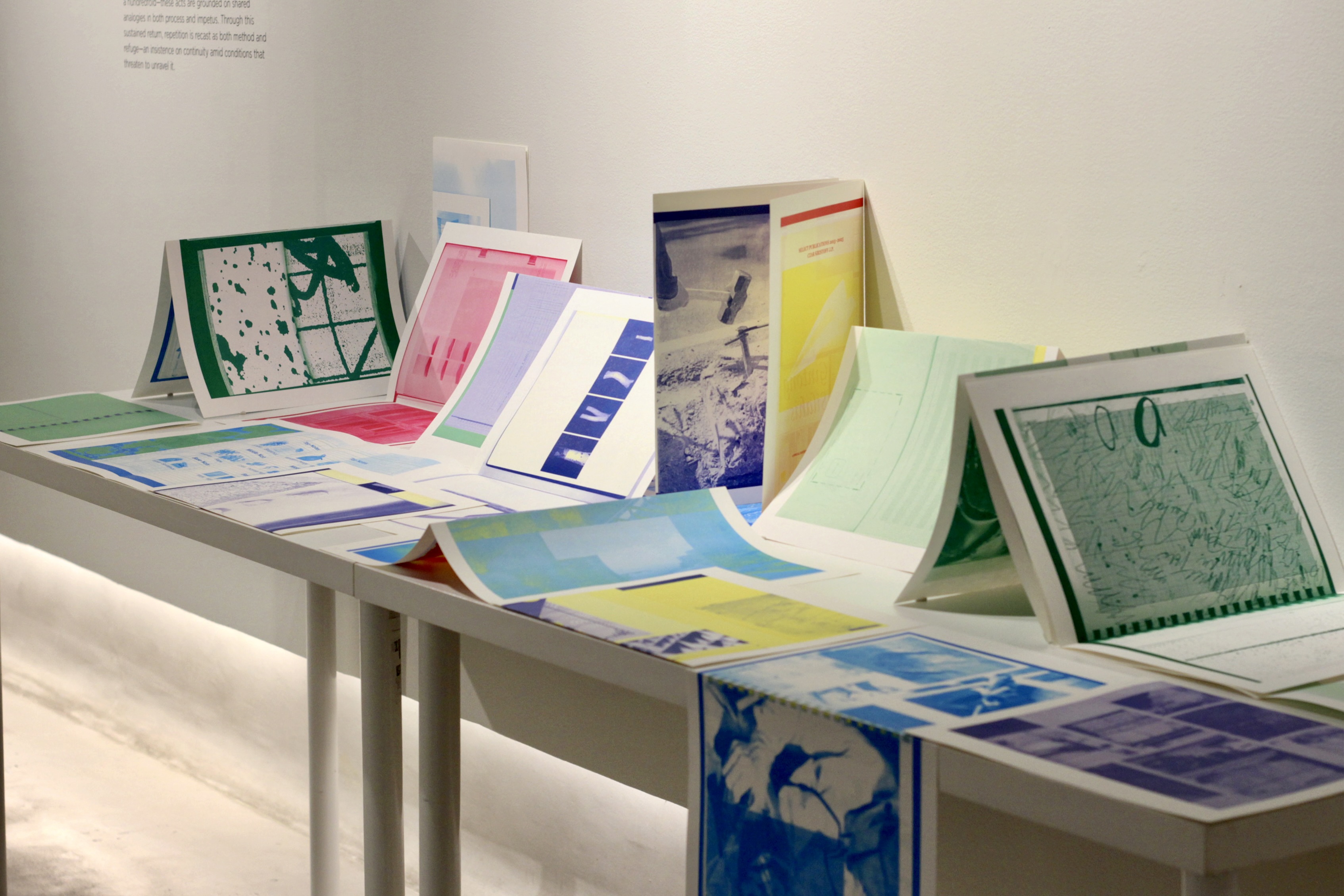
Browsing copy of Select Publications 2015-2025

The following section shows excerpts from the open conversation with the audience:

Audience: How do you see the significance of artist publication in the Filipino art landscape? I know that you've also published some works outside. What do you think is the difference, how was it received outside and how have your publications been received here in the local context?

CKJP: I started making artist publications at the same time I entered the gallery world in 2014. While I see the value in exhibition making, I also became aware of their limits, who gets access, who gets visibility, and how slowly opportunities can unfold. Artist publishing became a way for me to reclaim my agency and time. Instead of waiting for galleries or institutions to make space for me, what I did is I began creating my own space through printed matter.

Many artists and cultural workers that came before me have used publishing as a tool to mirror realities, as a form of resistance, to build communities, to educate, to archive, to play and experiment. We have seen this with mosquito presses during Martial Law era, in the 70s during the rise of conceptual art movement in the Philippines, the underground music scene in the 80s-2000s and their zine swapping culture. And the spirit of independent publishing continues through the work of Gantala Press, the publishers who participate at BLTX (Better Living Through Xeroxography), Paper Trail Projects, Library Una, Hardworking Goodlooking, Mako Micro Press, Magpies Press, Everything’s Fine, Saturnino Basilla, Lena Cobangbang, Studio Soup Zine Library, Kaon-Kaon, ipo-ipo projects, Panay Island Sound System, Komiket, among others. And I know there are many more artist publishers beyond my radar.

If it is only free to dream, I would love to see our institutions expand their understanding of artistic production. Beyond exhibitions, awards, biennales, I hope they also invest in publications, not only beautifully hardbound books, but also artist or designer publishing projects, zines, posters, newsletters, and pamphlets that can circulate widely through cities, towns, schools, libraries, and public spaces. And I hope this doesn't happen only in Manila but also through regional institutions across the country. It would be nice if more people have access to printed matter in the hope to imagine different futures.

Audience members

As for your second question, my experience publishing abroad changed the way I think about circulation. One example is New Refuge (2022), published by Temporary Press. The original version existed as a unique artist's book that was exhibited in a gallery in 2018. In 2022, it was reimagined as an edition of several hundred copies. For the first time, I witnessed the work travel beyond what I had imagined, reaching readers in different cities and different cultural contexts. 

Another publication that traveled widely was To Destroy Is To Build. Unlike New Refuge, it was intentionally simple: a forty-page offset-printed booklet on inexpensive paper that resembled architectural blueprints. Right before the lockdown in 2020, I printed several hundred copies here in the Philippines, and relied on my network of friends and collaborators to help distribute them. That publication not only generated income during a difficult period, but it also went on to be shortlisted for Foam Talent in 2022. It was an interesting realization that a publication doesn't have to be expensive to produce in order to have an impact. 

Of course, circulation also depends on many practical realities. Some books require an explanation because they deal with abstract ideas. At international book fairs, I often spend hours talking to visitors about the work. Although exhausting, those conversations also become part of the process as it helps me better understand my own books. Here in the Philippines, the dynamic is different. Readers often prefer discovering publications on their own rather than through a sales pitch. This is only based on my experience. :-)

Curator James Luigi Tana, who facilitated the talk and conversation

James Luigi Tana: I want to highlight your statement on negotiation and building relationships. Maybe you can elaborate on this idea of relationship-building through prints, through collaboration with local printers, local individuals that influenced this kind of production-based practice. 

CKJP: What I mean by this is that you can never make a book alone. I get the idea of DIY (do-it-yourself) but, in reality, constructing a book requires a lot of moving parts. Even though my name is in front of the cover, every publication is the result of people I worked with.

When making a book, it requires trusted suppliers for paper, a reliable printer, binder, and trimmer—if you are outsourcing it. Once the book is finished, the work continues with couriers, distributors, and booksellers who help your book to circulate. You also need librarians to take good care of your book for institutional archives and collections, for the afterlife of the book once the circulation stops. You also need a support group, your fellow artist publishers and friends, for grounding the self and your project.

My decision to produce most of my books within my neighborhood was initially a practical choice. It was simply easier to work with people I am familiar with, move the materials around in the streets I know and keep production cost manageable. At the same time, it allowed me to support local businesses. 

Two years ago, I decided to expand my publishing practice by editing this series called MAPA atbp. published under pook aralan unrelearning and ipo-ipo projects (founded by Kristian Henson and Monica Ramos). It featured the work of artists like Franco Mamaril, Isola Tong, Jepren Solis, Alfred Marasigan. With the understanding that we all came from different backgrounds, disciplines, and ways of working, I expected that there would be challenges and conflict. I think in every collaboration, this is pretty normal, as long as all participants of the project are in sync with our intention why we are making this project. Communication, empathy, respect, trust, are things that are also important, beyond a successful book. 

Audience members

JLT: Is it also a question of access? The materials, resources, economically?

CKJP: Definitely. Access is a huge part of it. When I started, I didn't have the resources to work with specialized printers or expensive production facilities. I could only work with what was available in San Pedro and nearby areas.

Yes, it seems like it did limit the growth of my publishing practice, but I also want to acknowledge that they somehow shaped the visual language of my publications. The kinds of paper I could afford, the printing technologies that were available, even the production methods, all of these influenced the final form of the books.

JLT: I also like the term 'constellation of text and images' that you used earlier. How do you think the idea of collective memory translates into your anthology? How do you choose the images, or form the constellation, that will go to this anthology?

CKJP: Instead of arranging the publications chronologically or trying to present a complete history, I selected two or three spreads from each book that captured a particular moment, feeling, or questions that was important to me at the time. I wasn't interested in building a linear timeline. I was interested in allowing these fragments to echo one another.

The decision to leave the anthology unbound was also intentional. Each spread overlaps with another, creating an accordion-like form, but every page can also be separated, rearranged, or even displayed on its own. I wanted the physical structure of the publication to reflect how memory operates. Through reading other books and thinking about the relationship between memory, place, and time, I became interested in the idea that memory is never fixed or complete. Some memories remain vivid, others become fragmented, while others disappear altogether.

That's why there is no correct sequence to this anthology. Every reader can arrange the pages differently, constructing their ideal timeline or interpretation of time. In doing so, they bring their own memories and associations into the publication. The anthology becomes less a record of my past and more a shared space where my experiences intersect with those of the reader.

Looking back over ten years of work which I believe is not that long, I wasn't trying to produce a definitive retrospective. I was trying to recognize recurring rhythms, ideas, relationships, images, and questions that kept returning even when I thought I fully understood the reason for it.

This article marks the first release of Word for Word, a series of transcriptions of public programs, including artist talks, conversations, and walkthroughs, by Cartellino

Text edited by the artist for clarity.