
• Feb. 27, 2026
											stdClass Object
(
    [id] => 841
    [title] => 

Art Fair Philippines 2026 Trends: Risks and Risk Takers

[slug] => 2026/02/27/Art-Fair-Philippines-2026-Trends-Risks-and-Risk-Takers [body] =>

"Risk is magic. Without risk, there's no magic." The line surfaced more than once during the talks at Art Fair Philippines 2026. It was recalled by at least two artists on separate occasions, and it lingered. Walking through the fair, it began to feel less like a passing remark and more like a quiet undercurrent.

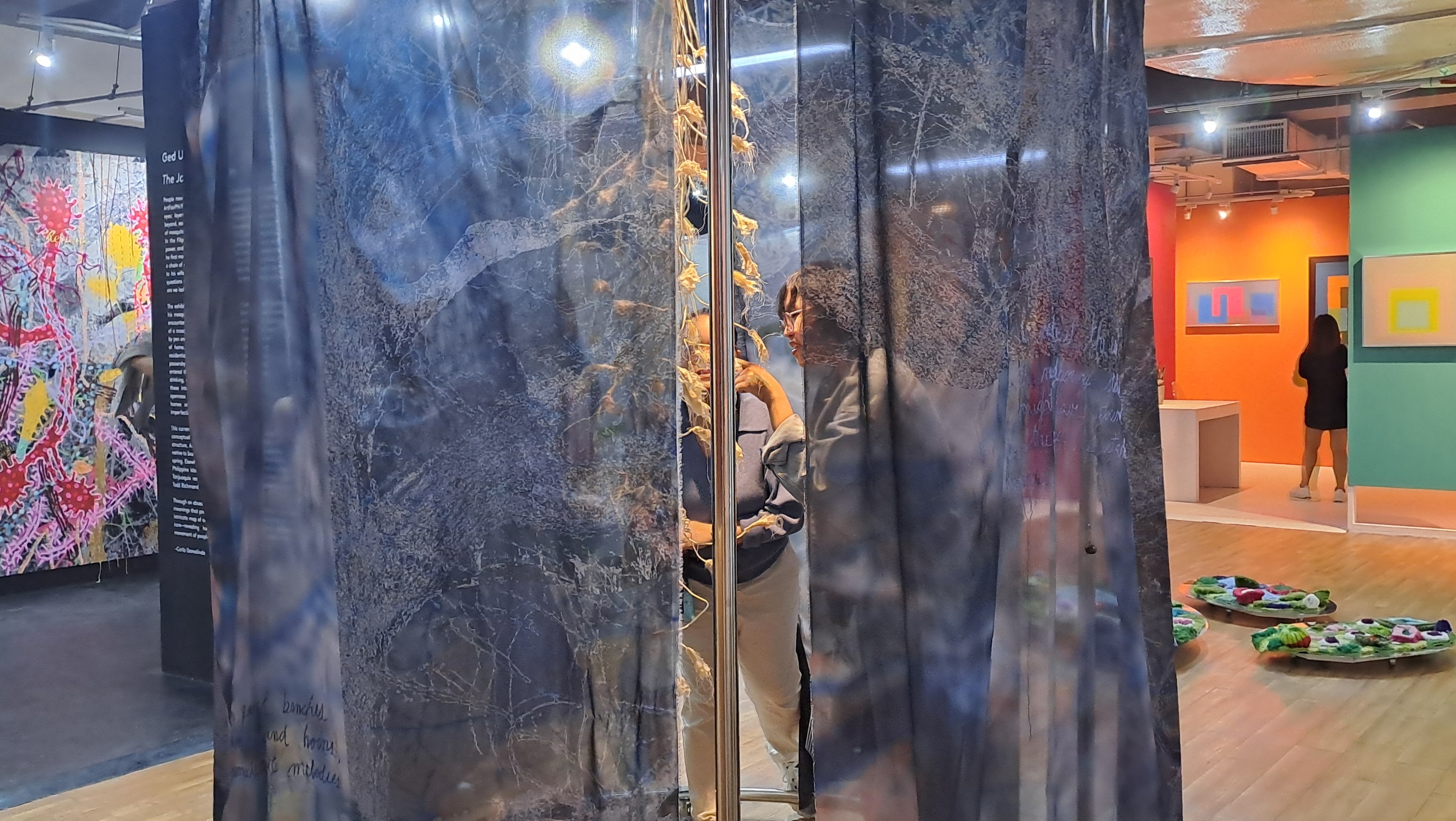
Guests interacting with Ged Merino’s fabric installations and part of his project "The Journey is Home"

Over the past two years, the global art market has experienced a noticeable slowdown. The latest Art Basel & UBS Global Art Market Reports describe a period of contraction following the post-pandemic surge. There is less frenzy at the top end, fewer trophy consignments, and a more deliberate pace among collectors. The mood suggests recalibration.

Dawn Atienza from Tin-aw Art Management describes a similar hesitation, though shaped by local contingencies rather than auction-house theatrics. After the controversy surrounding the flood-control issue, 1 she observed a thinning of momentum: collectors pausing, conversations stretching longer before decisions are made. If the global market is adjusting to economic headwinds, the local one seems to be negotiating its own. While the art world is often described as borderless, pressures remain stubbornly specific.

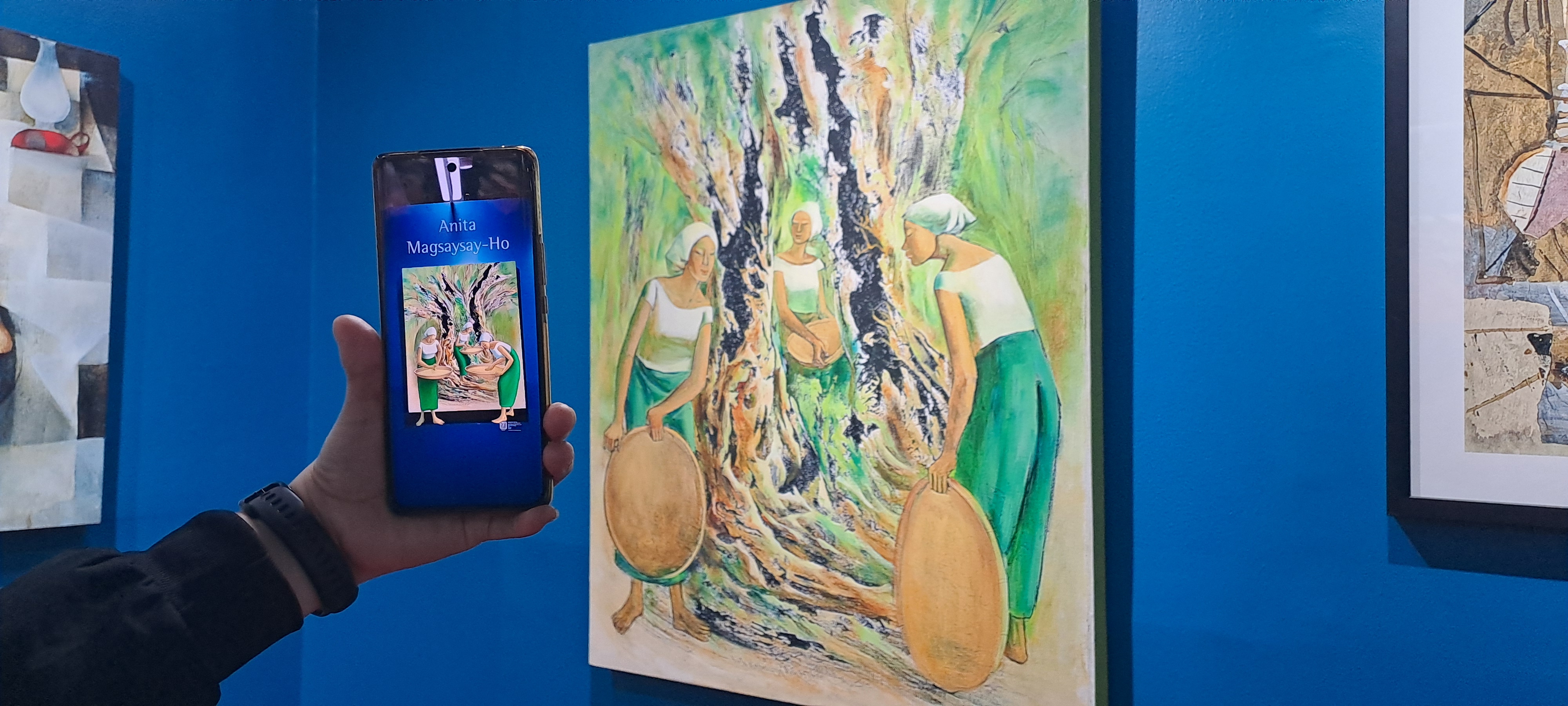
Cultural Center of the Philippines Scarlet Box features interactive editioned reproductions of works by National Artists.

Art Fair Philippines remains the flagship event even if younger fairs such as Xavier Art Fest and Modern and Contemporary Art Festival have begun attracting international galleries of their own. Despite recurring criticisms about its venue and accessibility, it continues to consolidate the broadest mix of galleries, industry professionals, and regional presentations under one roof, securing its position within Southeast Asia's art fair circuit.

Shyevin S'ng of Vin Gallery echoes this sentiment, “Art Fair Philippines is quite unique in the region. In many fairs today, VIP previews feel similar to regular public days. However, here the conversations are focused, engaged, and meaningful from the very beginning. The dialogue between collectors, galleries, and artists feels intentional.”

This edition felt like a return to form. The atmosphere of the office-turned-exhibition venue echoes its car park origins: compressed, centralized, and slightly improvised. By situating itself in Circuit Makati, the fair casted a spotlight on Kontempo—an upcoming Kunsthalle-type art space—and gestured toward what may become Makati's next art hub.

What We Saw Less Of

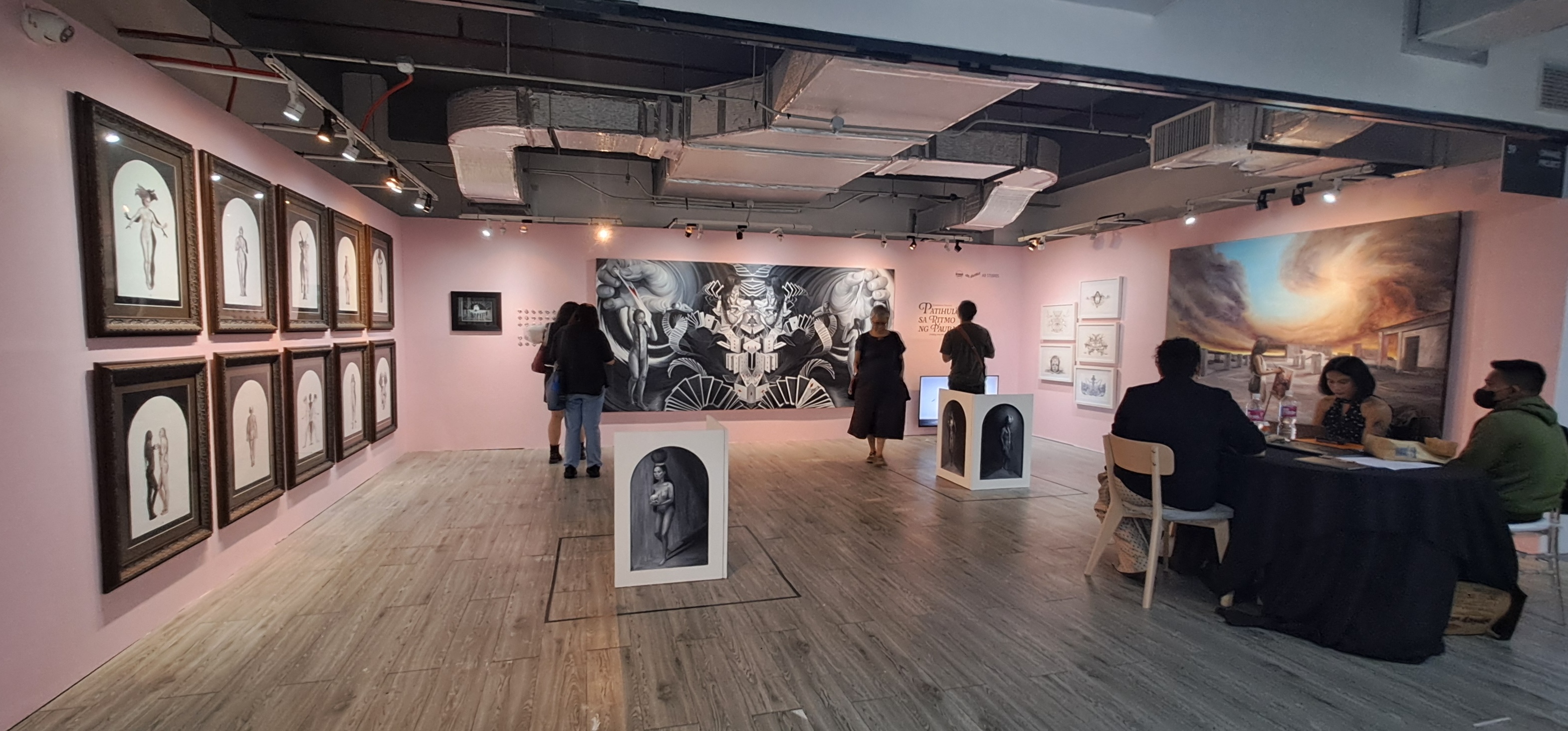
Solo presentations: Guenivere Decena’s “Patihulog sa Ritmo ng Paubaya” with Orange Project

Solo presentations remained a rare sight at the fair, but Orange Project demonstrated its commitment to Guenivere Decena’s Patihulog sa Ritmo ng Paubaya and similarly Crucible Gallery on Junyee for the second consecutive year. To devote a dedicated space to one practice in this climate is a statement of faith.

Orange Project co-owner Charlie Co shares, “We believe in Guenivere Decena’s talent. Personally, I collect her works. Her attention to the work she puts out there is remarkable.” For Co, the decision is rooted in stewardship: “Our goal is always to provide a platform for local artists. The sales come when you present well-curated exhibitions.”

The absence of Secret Fresh was equally noticeable given its closure last December. The terrain of art toys shifted to other galleries that had some art toy offerings. Shukado + Scena offered Hiroki Kakinuma’s Chicken Sapiens while Amez Yavuz’s focused on a presentation of Yeo Kaa's smaller works with a large sculptural piece at the center .

There were also presentations that leaned toward confrontation. Max Balatbat’s “Kapilya” struck some as a subtle testing of boundaries—particularly in the use of a Christ’s image. In a predominantly Catholic country, such imagery rarely passes quietly. It risks provoking both religious and artistic backlash.

What We Saw More Of

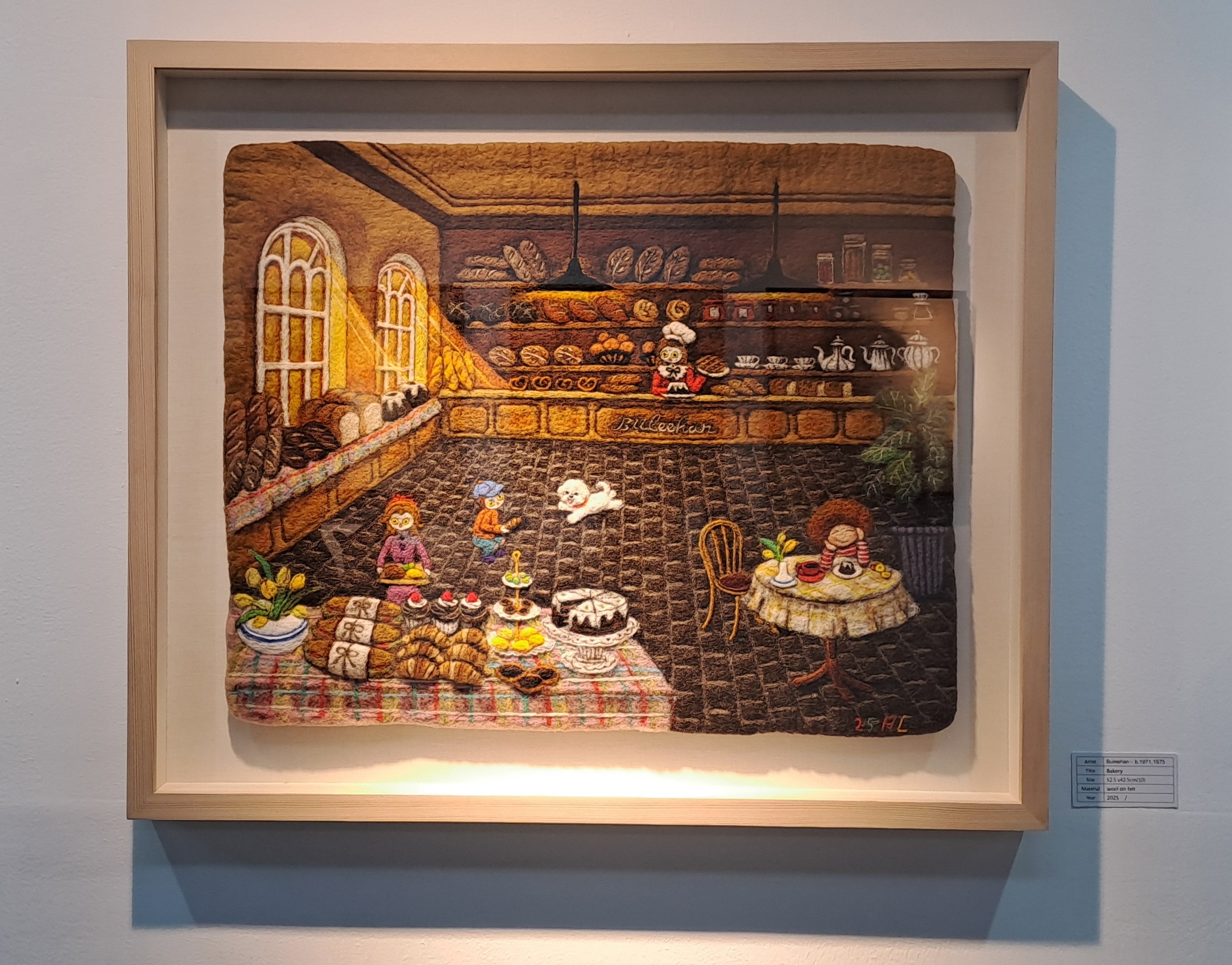
Artist-duo Buleehan’s “Bakery” at Caiyun Art

There was a proliferation of non-canvas objects. Across several group presentations, unconventional works surfaced with increasing frequency. Ceramic works by Jon and Tessy Pettyjohn alongside Ged Merino’s The Journey is Home, as featured projects, drove this point. 

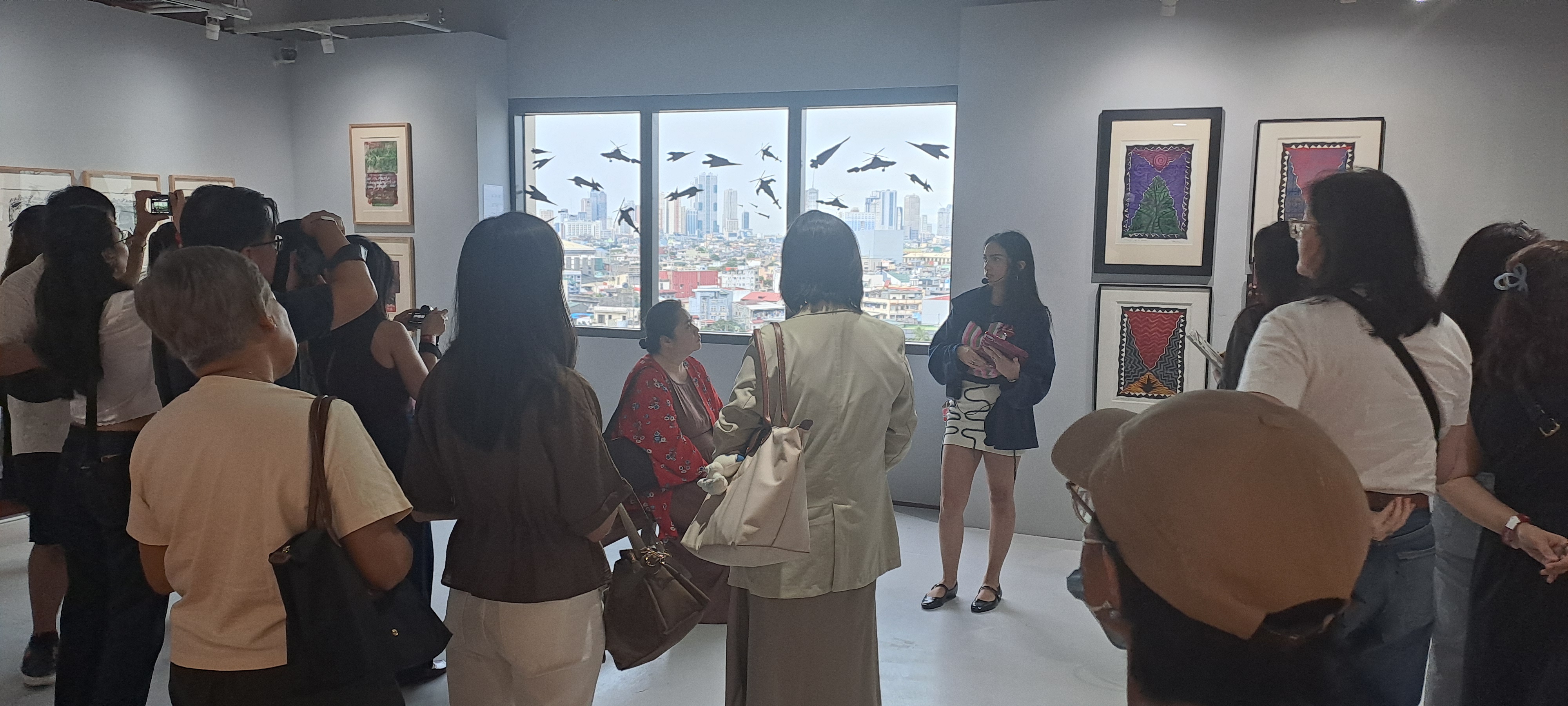
On the last day of the fair, guests swell into Imelda Cajipe-Endaya’s "A Votary’s Art" as part of Art Fair Philippines’ featured projects

Smaller formats, such as works on paper, feel visible in the current market climate. Beyond the assured presentations of prints by Ambie Abaño, whose works command scale even on paper, and Imelda Cajipe-Endaya, whose practice remains steadfast and historically grounded, there were fresh explorations of the medium across the booths.

Chang Chiung-Fang’s vibrant prints offered chromatic boldness, Cian Dayrit’s works on paper offered collectors a refreshed approach to research-based practices, and Carlo Tanseco’s emotionally charged “Bato Bato sa Langit” circulated among the offerings. The sustained visibility of works on paper unsettles a long-held hesitation among local collectors, who often cite the tropics and its humidity as practical deterrents.

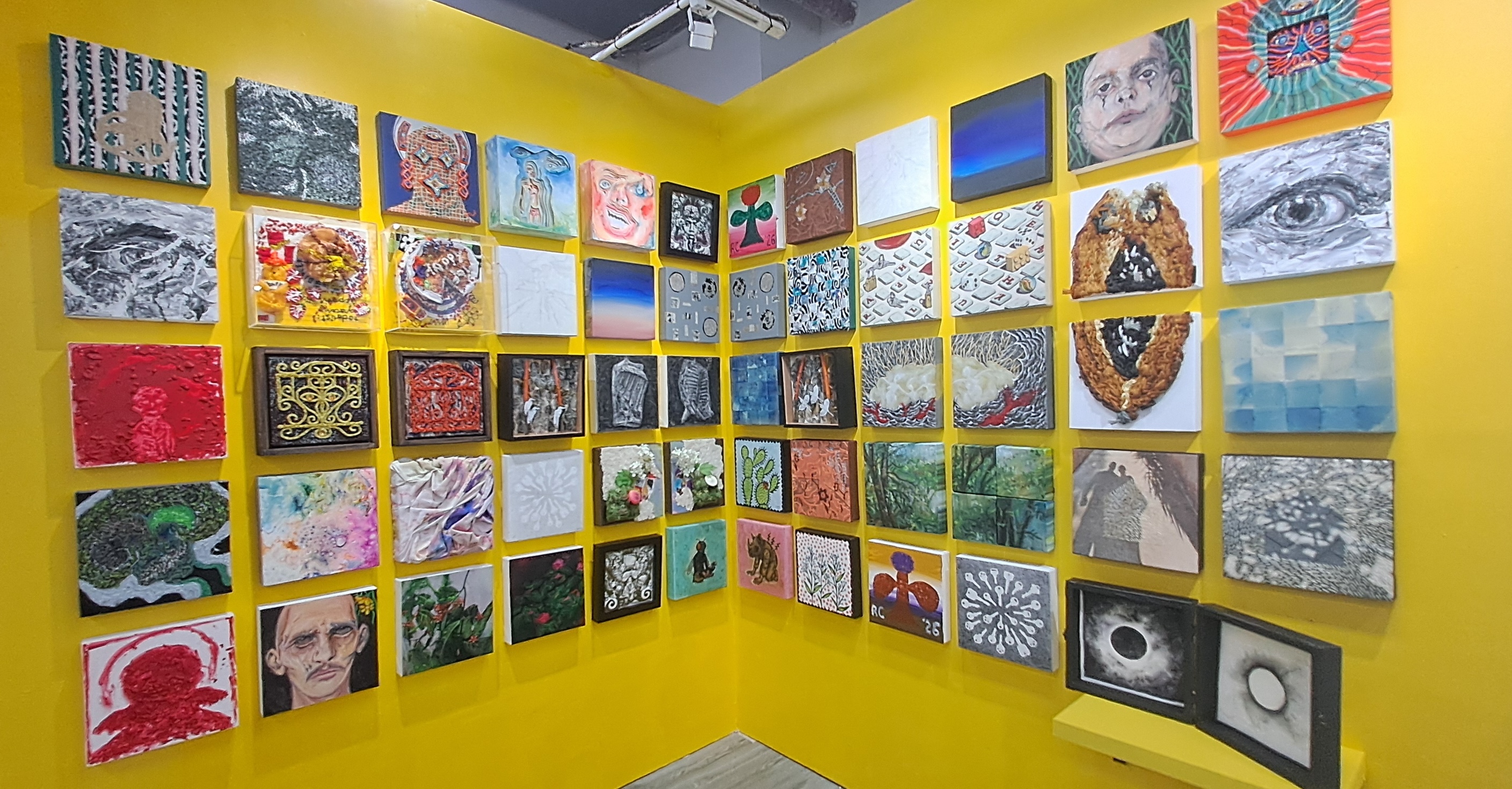
Small works that took-off at the fair. Core Contemporary brings together artists from both the Philippines and Malaysia into their space.

Alongside this material shift was the steady rise of artist merchandise such as books and objects produced by galleries themselves. Silverlens and Istorya Studios each carried items that are modest in scale and relatively accessible, prompting a bigger  question: are established artists and galleries beginning to view merchandise as extension? In a market recalibrating its thresholds, artist merchandise create circulation without dilution. They remain authored objects conceived as part of the practice rather than extracted from it.

Risk Takers

Risk was evident in the presentations of new names on the floor plan. Spaces such as Manila-based 125 Projects stood alongside first-time international participants Kawata Gallery from Kobe in Japan, Der Horng from Tainan in Taiwan, and Rose Studio Art Gallery from Prague, Czech Republic

For Marrione Contreras, co-curator of Core Contemporary, participation itself was a wager. “AFP is a significant commitment financially and strategically, especially when a gallery is still establishing its presence,” she says. As both curator and practicing artist, she approached the presentation with sincerity. Core Contemporary’s presentation reflected that calculus: a primary exchange between Malaysian and Filipino artists, a secondary grouping that paired emerging names with more established practitioners, and space for first-time exhibitors. “AFP is naturally market-oriented,” Contreras explains, “and different galleries navigate that in different ways. I try to balance sustainability with supporting artistic development. I believe it’s possible to care about both.” For them, risk was about how far one could stretch within the bounds of the market without breaking from it.

In frame: Pitchapa Wangprasertkul (in the box) and Janice Liuson-Young (far right) at the Triangulum booth

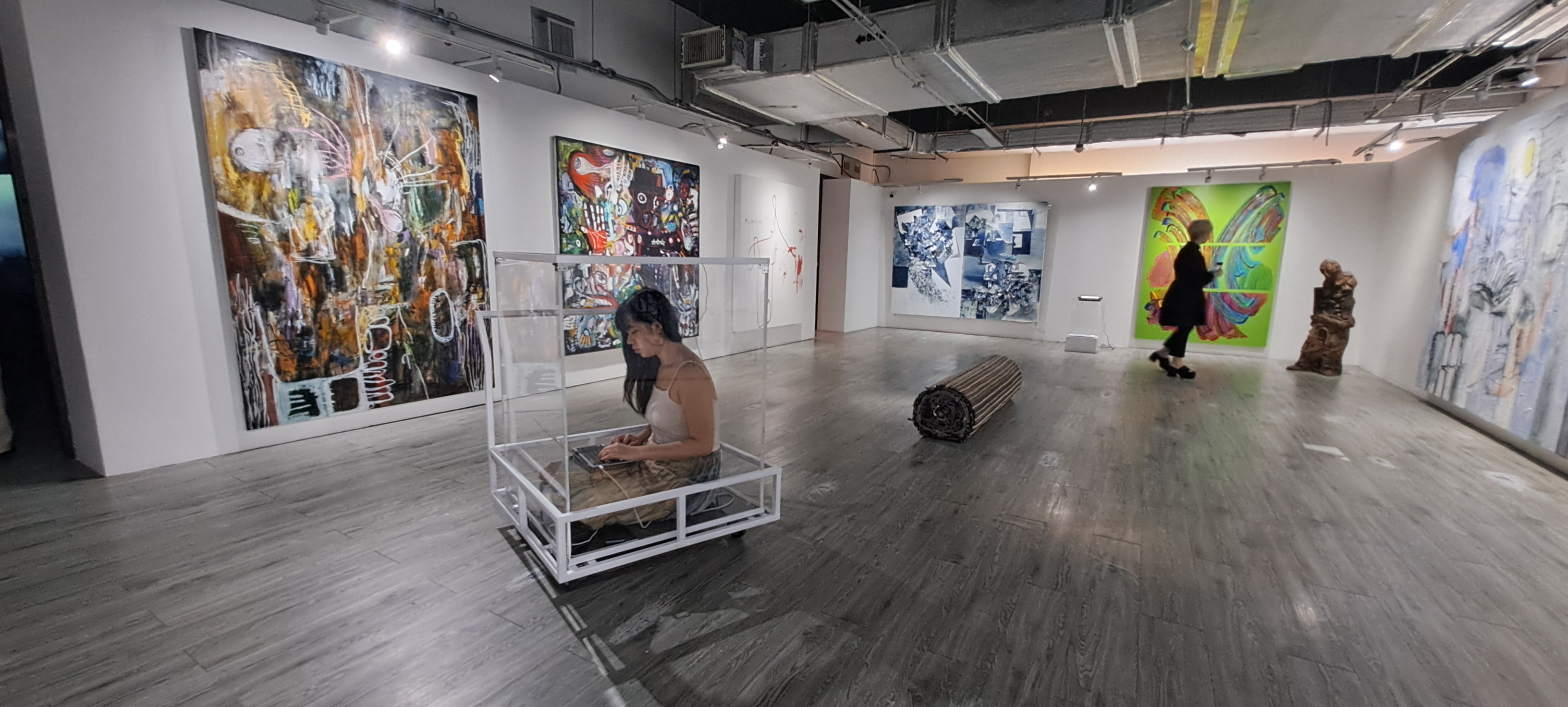
For others, risk was measured in scale. Speaking with ESL Chen of artist-run initiative Triangulum, the conversation turned to the decision to foreground large works. “It's hard to sell big works because of the market to which they naturally cater. You need collectors with large spaces—or people who are simply obsessed with art. I wanted people to really get immersed in large-scale works.”

Thai artist Pitchapa Wangprasertkul, encased in a tight fish-tank-like enclosure, exuded an arresting presence in the booth. The durational performance “The Standard” connected to the project Mothering/Unmothering at the Ayala Museum, which became a viral sensation. “If you think about it,” Chen reflects, “she’s living our reality inside that cage.” The gesture was an inquiry into labor, containment, and the emotional negotiations of contemporary living.

Chen hesitates to call the presentation risky. “It’s actually fun,” he says. The greater risk lies in the scale of the surrounding works and the refusal to scale down ambitions to meet the tempering attitudes of the market. In a year defined by recalibration, choosing magnitude can feel like its own form of defiance.

Author's note

1 Rey Lugtu notes that household spending cooled post flood-control scandal https://finex.org.ph/2025/11/20/between-scandal-and-slowdown/

Images by Marz Aglipay

[order] => 0 [type] => blog_post [status] => published [created] => 2026-02-27 12:04:44 [modified] => 2026-02-27 15:40:51 [post_date] => 2026-02-27 12:04:00 [category_id] => 0 [parent_id] => 4 [parent_slug] => features [parent_title] => Features [author_id] => 46 [author_name] => MARZ AGLIPAY [first_name] => The Cartellino [last_name] => Team [username] => cartellino.art [nickname] => The Cartellino Team [metadata] => a:28:{s:10:"page_title";s:79:"

art Fair Philippines 2026 Trends: Risks And Risk Takers

";s:4:"tags";s:0:"";s:10:"source_url";s:0:"";s:7:"excerpt";s:0:"";s:11:"readability";s:0:"";s:14:"social_excerpt";s:0:"";s:5:"quote";s:0:"";s:11:"post_footer";s:0:"";s:13:"featured_post";s:1:"1";s:17:"featured_category";s:0:"";s:15:"featured_slider";s:0:"";s:14:"featured_quote";s:0:"";s:7:"comment";s:1:"1";s:10:"post_image";s:52:"uploads/2026/02/ba7a6e520a04a80a88c972d9571ad1c9.jpg";s:11:"post_image2";s:52:"uploads/2026/02/6745688bc77eb977967f3f35108bfa39.jpg";s:11:"post_image3";s:52:"uploads/2026/02/f5f7eff3e31c26c341af318e9d0b9bf9.jpg";s:9:"post_type";s:0:"";s:11:"artist_name";s:0:"";s:13:"duration_from";s:0:"";s:11:"duration_to";s:0:"";s:17:"short_description";s:0:"";s:12:"artist_label";s:16:"About the Artist";s:16:"about_the_artist";s:0:"";s:14:"catalogue_link";s:0:"";s:14:"featured_works";s:0:"";s:11:"author_name";s:12:"MARZ AGLIPAY";s:15:"event_date_from";s:19:"2026-02-27 15:40:51";s:13:"event_date_to";s:19:"2026-02-27 15:40:51";} [category_title] => [category_slug] => )

Art Fair Philippines 2026 Trends: Risks and Risk Takers

"Risk is magic. Without risk, there's no magic." The line surfaced more than once during the talks at Art Fair Philippines 2026. It was recalled by at least two artists on separate occasions, and it lingered. Walking through the fair, it began to feel less like a passing remark and more like a quiet undercurrent.

Guests interacting with Ged Merino’s fabric installations and part of his project "The Journey is Home"

Over the past two years, the global art market has experienced a noticeable slowdown. The latest Art Basel & UBS Global Art Market Reports describe a period of contraction following the post-pandemic surge. There is less frenzy at the top end, fewer trophy consignments, and a more deliberate pace among collectors. The mood suggests recalibration.

Dawn Atienza from Tin-aw Art Management describes a similar hesitation, though shaped by local contingencies rather than auction-house theatrics. After the controversy surrounding the flood-control issue, 1 she observed a thinning of momentum: collectors pausing, conversations stretching longer before decisions are made. If the global market is adjusting to economic headwinds, the local one seems to be negotiating its own. While the art world is often described as borderless, pressures remain stubbornly specific.

Cultural Center of the Philippines Scarlet Box features interactive editioned reproductions of works by National Artists.

Art Fair Philippines remains the flagship event even if younger fairs such as Xavier Art Fest and Modern and Contemporary Art Festival have begun attracting international galleries of their own. Despite recurring criticisms about its venue and accessibility, it continues to consolidate the broadest mix of galleries, industry professionals, and regional presentations under one roof, securing its position within Southeast Asia's art fair circuit.

Shyevin S'ng of Vin Gallery echoes this sentiment, “Art Fair Philippines is quite unique in the region. In many fairs today, VIP previews feel similar to regular public days. However, here the conversations are focused, engaged, and meaningful from the very beginning. The dialogue between collectors, galleries, and artists feels intentional.”

This edition felt like a return to form. The atmosphere of the office-turned-exhibition venue echoes its car park origins: compressed, centralized, and slightly improvised. By situating itself in Circuit Makati, the fair casted a spotlight on Kontempo—an upcoming Kunsthalle-type art space—and gestured toward what may become Makati's next art hub.

What We Saw Less Of

Solo presentations: Guenivere Decena’s “Patihulog sa Ritmo ng Paubaya” with Orange Project

Solo presentations remained a rare sight at the fair, but Orange Project demonstrated its commitment to Guenivere Decena’s Patihulog sa Ritmo ng Paubaya and similarly Crucible Gallery on Junyee for the second consecutive year. To devote a dedicated space to one practice in this climate is a statement of faith.

Orange Project co-owner Charlie Co shares, “We believe in Guenivere Decena’s talent. Personally, I collect her works. Her attention to the work she puts out there is remarkable.” For Co, the decision is rooted in stewardship: “Our goal is always to provide a platform for local artists. The sales come when you present well-curated exhibitions.”

The absence of Secret Fresh was equally noticeable given its closure last December. The terrain of art toys shifted to other galleries that had some art toy offerings. Shukado + Scena offered Hiroki Kakinuma’s Chicken Sapiens while Amez Yavuz’s focused on a presentation of Yeo Kaa's smaller works with a large sculptural piece at the center .

There were also presentations that leaned toward confrontation. Max Balatbat’s “Kapilya” struck some as a subtle testing of boundaries—particularly in the use of a Christ’s image. In a predominantly Catholic country, such imagery rarely passes quietly. It risks provoking both religious and artistic backlash.

What We Saw More Of

Artist-duo Buleehan’s “Bakery” at Caiyun Art

There was a proliferation of non-canvas objects. Across several group presentations, unconventional works surfaced with increasing frequency. Ceramic works by Jon and Tessy Pettyjohn alongside Ged Merino’s The Journey is Home, as featured projects, drove this point. 

On the last day of the fair, guests swell into Imelda Cajipe-Endaya’s "A Votary’s Art" as part of Art Fair Philippines’ featured projects

Smaller formats, such as works on paper, feel visible in the current market climate. Beyond the assured presentations of prints by Ambie Abaño, whose works command scale even on paper, and Imelda Cajipe-Endaya, whose practice remains steadfast and historically grounded, there were fresh explorations of the medium across the booths.

Chang Chiung-Fang’s vibrant prints offered chromatic boldness, Cian Dayrit’s works on paper offered collectors a refreshed approach to research-based practices, and Carlo Tanseco’s emotionally charged “Bato Bato sa Langit” circulated among the offerings. The sustained visibility of works on paper unsettles a long-held hesitation among local collectors, who often cite the tropics and its humidity as practical deterrents.

Small works that took-off at the fair. Core Contemporary brings together artists from both the Philippines and Malaysia into their space.

Alongside this material shift was the steady rise of artist merchandise such as books and objects produced by galleries themselves. Silverlens and Istorya Studios each carried items that are modest in scale and relatively accessible, prompting a bigger  question: are established artists and galleries beginning to view merchandise as extension? In a market recalibrating its thresholds, artist merchandise create circulation without dilution. They remain authored objects conceived as part of the practice rather than extracted from it.

Risk Takers

Risk was evident in the presentations of new names on the floor plan. Spaces such as Manila-based 125 Projects stood alongside first-time international participants Kawata Gallery from Kobe in Japan, Der Horng from Tainan in Taiwan, and Rose Studio Art Gallery from Prague, Czech Republic

For Marrione Contreras, co-curator of Core Contemporary, participation itself was a wager. “AFP is a significant commitment financially and strategically, especially when a gallery is still establishing its presence,” she says. As both curator and practicing artist, she approached the presentation with sincerity. Core Contemporary’s presentation reflected that calculus: a primary exchange between Malaysian and Filipino artists, a secondary grouping that paired emerging names with more established practitioners, and space for first-time exhibitors. “AFP is naturally market-oriented,” Contreras explains, “and different galleries navigate that in different ways. I try to balance sustainability with supporting artistic development. I believe it’s possible to care about both.” For them, risk was about how far one could stretch within the bounds of the market without breaking from it.

In frame: Pitchapa Wangprasertkul (in the box) and Janice Liuson-Young (far right) at the Triangulum booth

For others, risk was measured in scale. Speaking with ESL Chen of artist-run initiative Triangulum, the conversation turned to the decision to foreground large works. “It's hard to sell big works because of the market to which they naturally cater. You need collectors with large spaces—or people who are simply obsessed with art. I wanted people to really get immersed in large-scale works.”

Thai artist Pitchapa Wangprasertkul, encased in a tight fish-tank-like enclosure, exuded an arresting presence in the booth. The durational performance “The Standard” connected to the project Mothering/Unmothering at the Ayala Museum, which became a viral sensation. “If you think about it,” Chen reflects, “she’s living our reality inside that cage.” The gesture was an inquiry into labor, containment, and the emotional negotiations of contemporary living.

Chen hesitates to call the presentation risky. “It’s actually fun,” he says. The greater risk lies in the scale of the surrounding works and the refusal to scale down ambitions to meet the tempering attitudes of the market. In a year defined by recalibration, choosing magnitude can feel like its own form of defiance.

Author's note

1 Rey Lugtu notes that household spending cooled post flood-control scandal https://finex.org.ph/2025/11/20/between-scandal-and-slowdown/

Images by Marz Aglipay